



PCB UV LED pattern exposure machine overview
A PCB UV LED pattern exposure machine is used to transfer a circuit pattern onto photoresist-coated boards with controlled ultraviolet exposure. For buyers, the main problem it solves is consistency: when pattern alignment, light output, and exposure time vary from board to board, downstream etching and imaging results become unstable. An enclosed exposure system helps standardize the process, reduce ambient light interference, and give operators a safer, more controlled working environment.
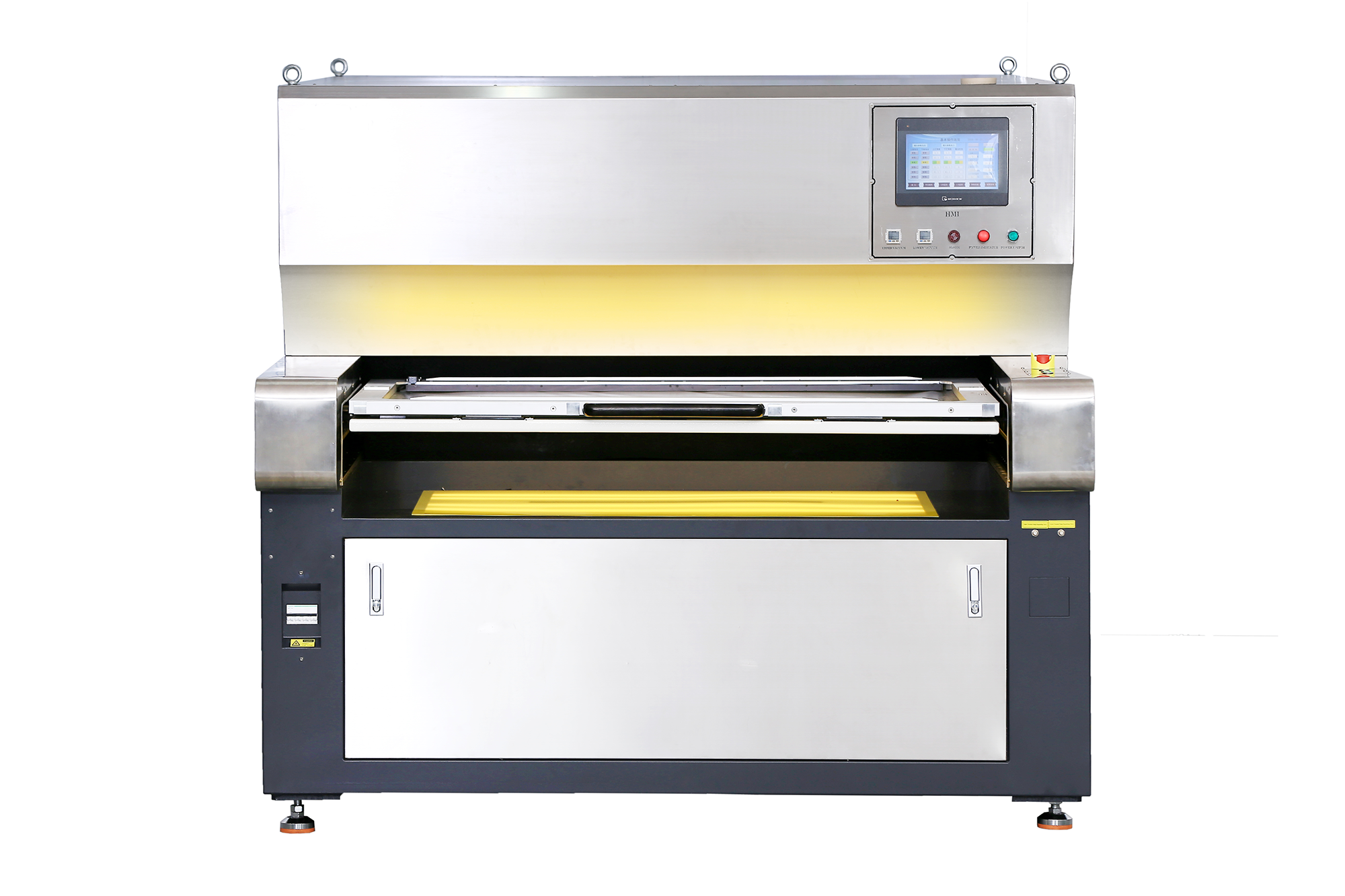
Based on the visible machine structure provided, the equipment appears to be an industrial enclosed cabinet with a wide front-access chamber, a touchscreen HMI, and service panels for maintenance. Because the exact internal process cannot be confirmed from the image alone, the description below focuses on the visible features and on standard industry use of a UV LED exposure system for PCB production.
Machine Specification
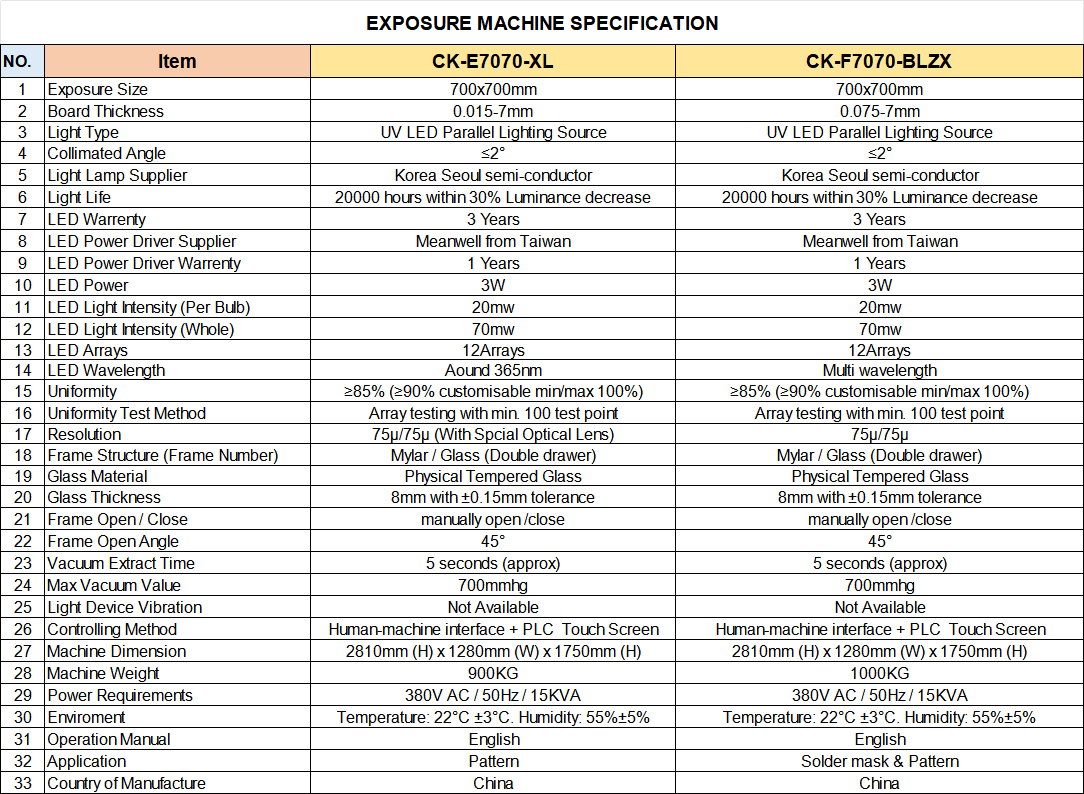
What this equipment is designed to do
In PCB fabrication, pattern exposure is the stage where ultraviolet energy hardens or activates photoresist in the selected areas defined by a mask or digital pattern. A PCB photoresist exposure machine helps manufacturers keep line widths, pad shapes, and image registration stable before developing and etching. When UV LED technology is used, the light source is typically chosen for its fast response, compact control, and long service life compared with older lamp-based systems, though exact performance depends on the final machine design.
The cabinet-style layout shown here suggests a machine built for controlled internal processing. The enclosed chamber, wide working opening, and operator interface all point toward a production tool designed for repetitive, traceable workflow rather than manual bench exposure.
Visible structure and key capabilities
Enclosed processing chamber
The machine uses a closed metal housing with a front-access working area. This kind of enclosure is useful for blocking stray light, protecting operators, and keeping the process zone more stable during exposure.
Touchscreen HMI control
A touchscreen interface supports parameter setting, process monitoring, and operator guidance. In production settings, this makes it easier to manage exposure routines, alarms, and status checks without relying only on mechanical controls.
Wide opening and service access
The visible front aperture and multiple side panels indicate that the machine is built for loading, unloading, and maintenance access. For an automatic PCB exposure machine, that matters because line flow and downtime both affect output.
Leveling base and lifting points
Adjustable feet help the cabinet sit correctly on factory floors, while top lifting points simplify handling during installation. These are practical details, but they also show the machine is intended for plant-level deployment rather than light-duty use.
Materials and construction
The visible exterior appears to be sheet-metal construction, likely using painted steel or brushed metal panels with a darker base frame. That type of build is common in industrial equipment because it provides rigidity, serviceability, and protection for internal controls and motion components. For PCB exposure equipment, a rigid cabinet also helps support alignment and repeatable positioning.
Surface finish options may vary by build, but in this type of machine buyers often look for corrosion-resistant panels, easy-to-clean surfaces, and enclosed cable routing. If the working zone must remain clean, the cabinet design should support dust control and straightforward maintenance.
Manufacturing process and system integration
Equipment in this category is usually assembled from fabricated sheet-metal parts, machined mounting plates, electrical wiring, control panels, and integrated light modules. Depending on the final specification, the machine may also include exhaust, cooling, transport, or positioning subsystems. For a UV LED mask exposure equipment platform, the final build typically needs careful integration of illumination uniformity, board handling, and process timing.
Since the image does not confirm the internal exposure mechanism, buyers should request the process layout, optical arrangement, and board-loading method before assuming any automation level or throughput.
Application scenarios
This type of machine is most relevant to electronics manufacturing environments that use photoresist imaging or controlled UV processing. Typical scenarios include PCB prototyping lines, small-batch board production, and factory workflows where repeatable exposure is needed before development and etching. A UV LED exposure system for PCB can also fit adjacent production tasks where a stable enclosed chamber is useful, such as controlled inspection or general material processing, but those uses should be confirmed against the actual machine configuration.
Quality control considerations
For buyers, the most important quality questions are not only about cabinet appearance. You should confirm light uniformity, exposure repeatability, chamber flatness, board positioning accuracy, and control consistency across shifts. If the machine is intended for photoresist work, ask how exposure time is set, how the light source is calibrated, and whether the system supports documentation of process parameters. Those details often determine whether the machine performs well in a real production line.
Customization guidance
When evaluating a PCB UV LED pattern exposure machine, customization usually starts with working size, loading method, control logic, and chamber layout. Some buyers need a compact unit for short boards, while others need a wider opening for panel production. It is also common to specify HMI language, safety interlocks, internal lighting arrangement, and integration with upstream or downstream handling equipment. Because exact dimensions and internal specifications are not supplied here, each of these items should be confirmed during inquiry.
Buyer decision factors
Before purchasing, compare the machine’s cabinet rigidity, access for maintenance, interface usability, and suitability for your PCB process flow. If your line depends on image consistency, prioritize exposure control and chamber stability over cosmetic details. If floor space is limited, check footprint and service clearance. If you need production traceability, ask whether the control system can store settings or support process records. Those practical points matter more than generic product claims.
Request details for your production line
If you are sourcing an automatic PCB exposure machine or a related UV LED mask exposure equipment platform, share your board size, resist type, target output, and handling method. With that information, the machine can be matched more accurately to your process. Contact us to discuss the chamber layout, control options, and integration requirements for your PCB workflow.