




8 cutter auto PCB V cut machine for stable panel separation
The 8 cutter auto PCB V cut machine is designed for manufacturers that need cleaner, more controlled board separation without putting extra stress on finished panels. In PCB production, the real problem is rarely cutting alone; it is avoiding edge damage, inconsistent scoring depth, dust, and operator fatigue while keeping line output steady. A well-built PCB scoring machine helps reduce those risks by guiding the V-groove process with repeatable motion and fixed tooling, which is especially valuable when the same board size runs again and again.
For plants handling rigid boards, higher panel volumes, or assembly lines that depend on predictable depaneling, this type of equipment becomes a practical production tool rather than a convenience. The 8 cutter layout is aimed at faster throughput and more efficient board processing, while keeping the operation organized inside an enclosed machine structure.
Product overview
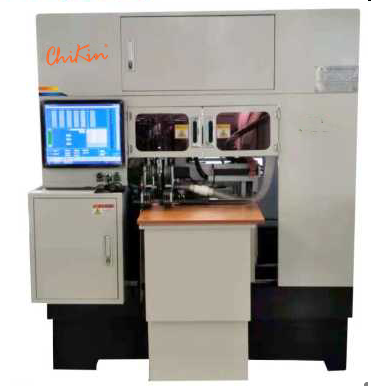
As an industrial PCB panel separation solution, the 8 cutter auto PCB V cut machine is intended to support V-score operations in a controlled environment. Based on the visible machine style and common industry use, it belongs to the category of enclosed automated process equipment with a front work zone, viewing windows, a control area, and utility routing for ventilation or extraction. That makes it a strong fit for production sites that want a more protected workflow than an open bench-top separator.
The enclosed cabinet format helps isolate the process area and gives operators a defined loading and unloading station. For buyers comparing a multiple cutter PCB V scoring machine with more manual depaneling methods, the main value is consistency: the board is guided through a repeatable cutting or scoring path instead of depending on hand pressure or operator skill alone.
Machine Specification

Key capabilities and visible machine features
Enclosed operating structure
The cabinet-style body provides a guarded working bay. That design is useful when the process creates dust, chips, or fumes, or when the factory wants a clearer separation between operator area and machining area. The visible inspection windows allow process observation without opening the full enclosure.
Front loading and centralized work zone
The front access opening and central platform indicate a fixed loading position. This arrangement is helpful in line production because boards can be presented to the same station each cycle, reducing handling variation. A centered work surface also supports easier alignment for rigid PCB panels.
Integrated utilities and auxiliary cabinet
Top-mounted ducting and the separate side cabinet on casters suggest utility support, likely for extraction, electrical routing, or other process connections. In manufacturing terms, that kind of layout is valuable because it keeps service elements organized and easier to access during maintenance.
Operator controls and safety elements
Visible emergency stop control and panel interfaces are important buyer-facing signs of a production machine rather than a simple fixture. For factory managers, these details matter because they support safer daily operation and faster response during setup or fault handling.
Materials and finish options
The visible construction appears to use painted sheet metal in a light gray industrial finish, with dark window panels and a black lower frame section. In this equipment class, buyers usually expect durable metal cabinetry, service panels, and wear-resistant load surfaces. Depending on the final build, finish options may include different cabinet colors, viewing window materials, surface treatments for corrosion resistance, and work-surface materials suited to the plant environment.
For PCB manufacturing lines, finish selection should be judged by practical needs: cleaning frequency, exposure to dust, space constraints, and how closely the machine must integrate with adjacent equipment. If a factory already uses a rigid PCB V scoring machine or an automatic PCB depaneling machine in the same cell, matching cabinet geometry and utility routing can simplify layout planning.
Manufacturing process and operating logic
Although the exact internal process cannot be confirmed from the image alone, the machine is clearly built around an enclosed industrial workflow. In a typical PCB V-cut application, the operator loads the panel, aligns the board, and the machine performs a controlled scoring or separation action through the working zone. Multiple cutters are often chosen to improve process continuity and handle repetitive panel jobs more efficiently.
That is why buyers often compare a multiple cutter PCB separator with a single-tool setup. More cutters can mean better productivity on suitable panel formats, provided the machine is properly configured for the board structure and groove specification. A well-designed multi-blade PCB cutter supports cleaner production flow when the same panel family is processed in batches.
Application scenarios
This machine category is relevant for electronics factories that produce rigid PCBs, assembly houses that need internal panel separation steps, and OEM lines with repetitive board formats. It is also useful in sites where operator shielding, dust containment, or vented exhaust routing is preferred.
Typical buyer use cases include:
• batch V-scoring of rigid boards
• front-loaded production cells with controlled access
• factory lines that need repeatable depaneling behavior
• enclosed processing stations where extraction and safety access are important
Quality control and buyer decision factors
When evaluating a PCB scoring machine, buyers should focus on practical production needs rather than headline claims. The main decision factors are cutter configuration, board format compatibility, ease of setup, enclosure safety, maintenance access, and how the machine fits the existing line. If the process is sensitive to edge quality, the stability of the scoring path becomes a key purchasing criterion.
Quality control in this equipment class usually depends on mechanical alignment, repeatable feed behavior, cabinet integrity, and clear operator interfaces. For procurement teams, the question is not only whether the machine can cut, but whether it can keep output stable across shifts and reduce rework caused by inconsistent separation.
Customization guidance
Because PCB production differs from plant to plant, customization is often worth discussing early. Buyers may need adjustments to worktable size, cutter layout, extraction routing, access door placement, or control panel arrangement. If your line handles several board families, ask whether the machine can be adapted for different panel sizes or changeover needs. If the line is already built around other automation, coordinate the machine footprint and utility points before final purchase.
Why this machine belongs on a serious production line
An 8 cutter auto PCB V cut machine is most compelling when the buyer wants controlled separation, better consistency, and a cleaner operating environment than manual methods can offer. For manufacturers under pressure to improve line discipline, the value comes from a guarded enclosure, structured loading, and a process that can be integrated into a repeatable workflow. That is the kind of equipment that helps a plant move from ad hoc handling to reliable production rhythm.
Request the right configuration
If you are planning a new PCB panel separation station or upgrading an existing line, start by defining your board type, panel size, required cutter layout, and utility needs. Share those details with your equipment supplier so the machine can be matched to your production flow. Contact us to discuss a suitable PCB scoring machine configuration for your application and line layout.