



PCB Silk Screen Printing Machine Overview
A PCB silk screen printing machine is used to transfer ink or paste accurately onto flat boards and panels when consistent alignment matters. For buyers, the main problem it solves is repeatability: manual printing can drift from board to board, but a dedicated printing system helps maintain stable registration, cleaner edges, and more efficient production flow for PCB-related marking or other flat-substrate printing tasks.
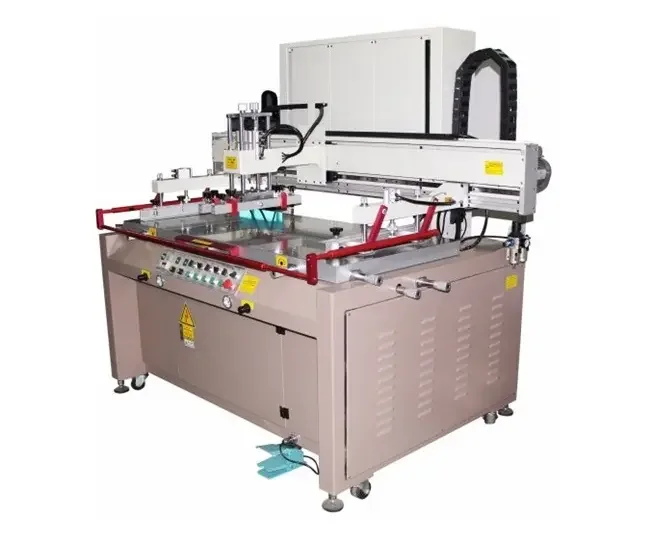
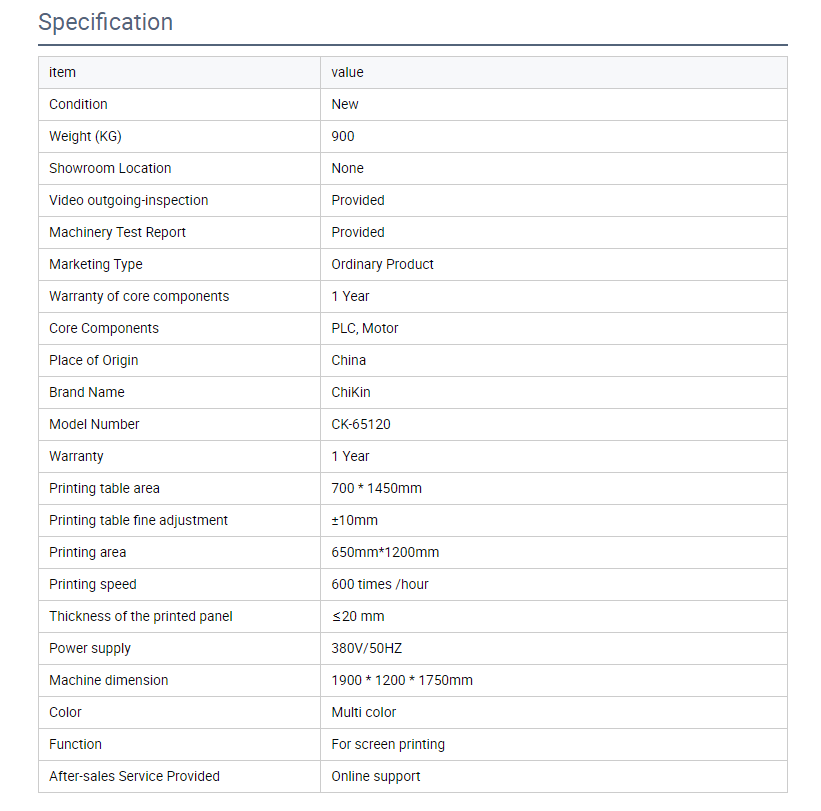
Based on the visible structure, this unit appears to be an industrial flatbed screen printing machine with a floor-standing cabinet base, a raised work table, and a moving print head or squeegee assembly. It looks suitable for controlled, repeatable printing on rigid or semi-rigid materials. Some details such as brand, exact print area, and substrate limits are not visible, so those should be confirmed before purchase.
Product Structure and Working Principle
This type of PCB printing equipment generally combines a stable bed, a screen frame support, and a carriage system that moves the printing assembly across the work surface. The visible control panel suggests operator-adjustable functions, while the overhead structure and rails point to guided motion for print consistency. The enclosed lower cabinet likely houses electrical components and support hardware, helping keep the machine organized and easier to service.
In practical use, a screen is positioned over the substrate, ink or paste is applied, and the print head moves across the print area to force material through the stencil openings. For PCB-related work, that process is often selected when the buyer needs regular placement of printed marks, legends, or other planar graphics on boards or panels.
Key Visible Features
Stable flatbed format
The machine has a large rectangular work surface, which is important for registration and repeatable placement. A flatbed design also makes it easier to handle sheets, panels, or other flat parts during setup.
Control panel and machine housing
A front-mounted control panel with buttons and indicators is visible. This helps the operator manage the printing cycle and monitor machine status without reaching into the motion area.
Rail-guided print movement
The print head appears to travel on a rail or carriage system. Guided motion is a practical requirement for consistent pressure and aligned passes in a PCB screen printing machine.
Mobility and installation
The machine is mounted on casters or leveling feet, which can simplify positioning on the shop floor. The cabinet-style base also gives the unit a more enclosed, industrial layout.
Materials and Finish Options
From the image, the housing appears to be painted metal in a light beige or gray tone, while the exposed rails and table surface look metallic. In machines like this, buyers commonly evaluate frame rigidity, corrosion resistance, and easy-clean surfaces because ink handling and production dust can affect long-term operation.
If you are comparing a PCB manufacturing machine for production use, ask about the frame material, surface coatings, and whether the table or support areas are designed for cleaning after repeated screen printing cycles. Those factors influence durability and maintenance effort.
Manufacturing Process and Use Cases
This machine is positioned for flatbed screen printing rather than complex 3D part decoration. Typical applications may include printed panels, industrial labels, signs, component sheets, and other flat products that need repeatable markings. For PCB workflows, it may be used for screen-applied legends, markings, or related printing steps, depending on the line setup.
Because substrate compatibility is not visible, buyers should confirm whether the machine is intended for bare boards, coated panels, rigid sheets, or semi-rigid parts. If your line requires specific ink viscosity, stencil thickness, or registration precision, those parameters should be checked against the machine configuration.
Quality Control Considerations
When evaluating PCB printing equipment, focus on registration stability, print head movement consistency, table flatness, and repeatability from one cycle to the next. Also inspect the condition of the rails, clamps, and control interface. A machine may look robust, but the actual print quality depends on alignment accuracy and the consistency of the motion system.
For production planning, it is also worth checking how easy it is to set up the screen, load substrates, and remove finished parts. A good PCB screen printing machine should reduce handling errors, not add setup complexity.
Customization and Buyer Decision Factors
Before selecting this type of machine, buyers usually compare print area, automation level, screen mounting method, motion control, and whether the layout fits existing line space. If you need integration into a broader PCB manufacturing machine line, confirm power requirements, footprint, and whether accessories such as drying or curing units are available separately.
Useful questions for the supplier include: What substrates are supported? Is the system semi-automatic or fully automatic? How is registration adjusted? What are the available work surface dimensions? These points matter more than general appearance when the goal is reliable production.
Contact for More Information
If you are sourcing a PCB silk screen printing machine for flat-panel or board printing, request the machine model, technical sheet, and configuration details before purchase. Share your substrate size, ink type, and target output so the supplier can confirm whether this PCB printing equipment matches your process.