



FR4 pinning machine for stable, repeatable board processing
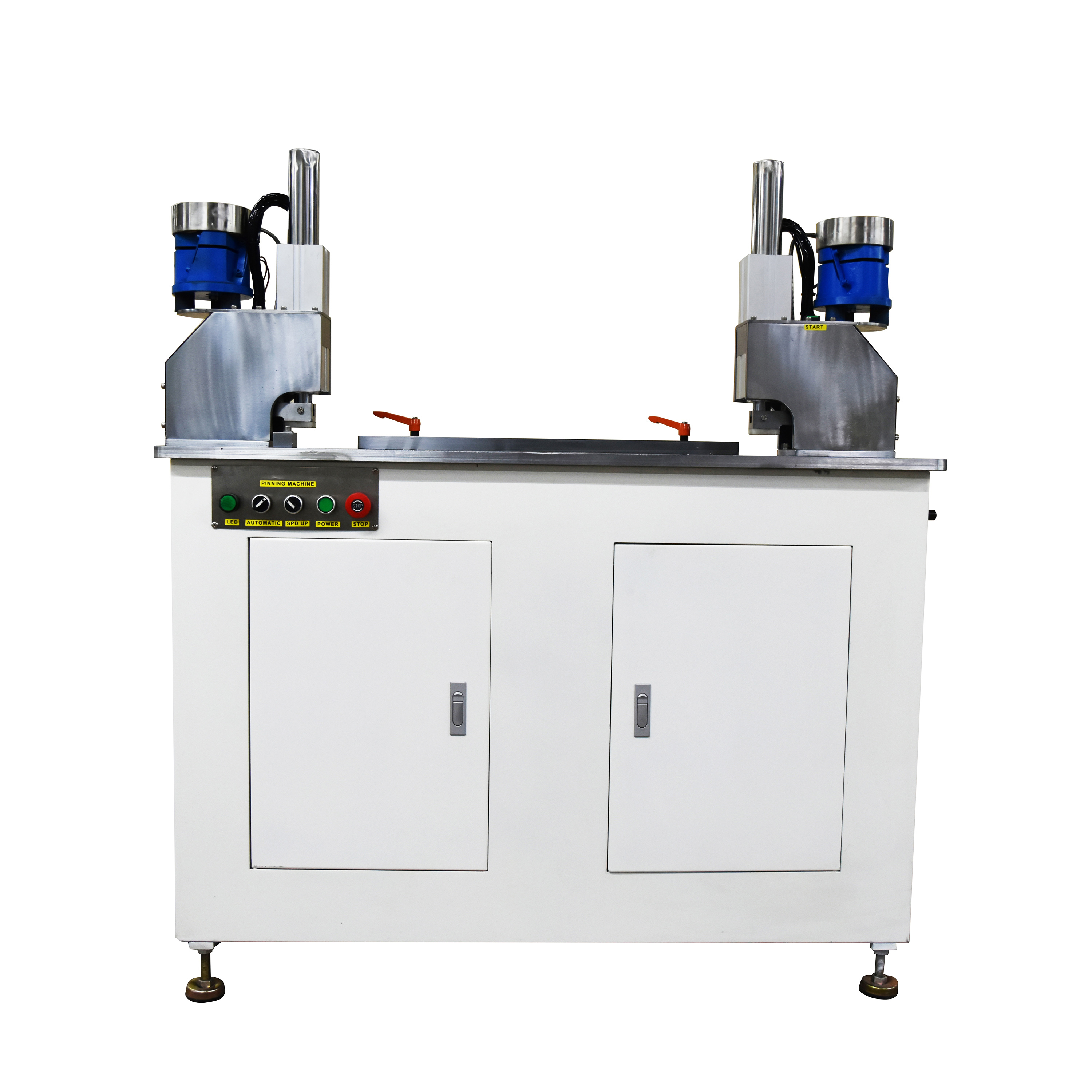
The FR4 pinning machine is designed to solve a familiar production problem: how to place, clamp, and process boards with consistent position control instead of relying on slow manual alignment. In a factory setting, that matters when operators need repeatable results across batches, especially for FR4 panels and similar flat workpieces that must be held securely before a mechanical operation. Based on the visible machine layout, this equipment uses a dual-head, fixture-based structure with a long worktable, giving buyers a practical platform for controlled, semi-automatic processing.
Product overview
This machine is a floor-standing industrial unit with a cabinet base, a flat top bed, and two vertically mounted processing heads positioned at opposite ends of the work area. The structure suggests a station built for repetitive operations where the workpiece is placed on the table, clamped in a central fixture zone, and processed with operator control. The visible green start button, red emergency stop-style button, and indicator light point to a manual or semi-automatic workflow rather than a fully enclosed, unattended line.
For buyers evaluating PCB pinning equipment, the main value is not just the hardware itself, but the repeatable positioning it supports. A stable frame, dual-station layout, and fixed work surface help reduce variation caused by hand placement and improve day-to-day consistency on the shop floor.
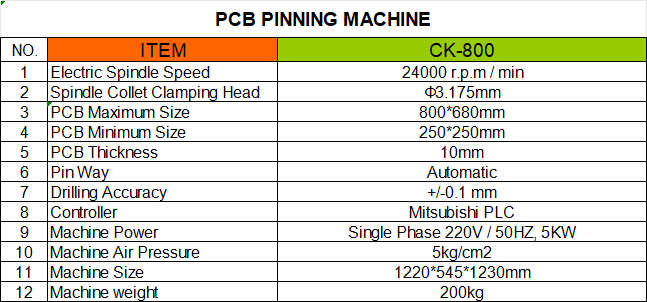
Machine Specification
Key visible capabilities
Dual-head processing layout
The two vertical head assemblies suggest paired operations or mirrored processing steps. That can be useful where a part needs attention at two points, or where a production cycle benefits from left-right symmetry and fixed reference positions.
Long horizontal worktable
The extended table surface gives operators room to position rectangular parts, long fixtures, or assemblies. This is one reason the machine may suit aluminum circuit board pinning machine workflows as well as other flat-panel processing tasks, although the exact operation is not confirmed from the image.
Operator-controlled cycle
Front-panel buttons and an emergency stop-style control indicate that an operator can start and stop the process directly. That is often preferred in batch production, prototyping, and changeover-heavy work where flexibility matters more than a fully automated line.
Materials and finish options
From the visible surface treatment, the machine appears to combine a painted light-gray cabinet, metallic upper assemblies, and a brushed or stainless-looking table area. Those finishes are typical of industrial equipment built for serviceability and shop-floor durability. For buyers, the important question is usually not appearance alone, but whether the frame, guards, table plate, and wear surfaces can be specified to match the work environment. If your application needs corrosion resistance, easy cleaning, or frequent fixture changes, those details should be confirmed during quotation.
Manufacturing and operating concept
The layout suggests a semi-automatic PCB pinning machine or related fixture machine: the operator loads the part, aligns it against the tooling or stops, clamps it in place, and initiates the cycle. The dual-head arrangement implies that the machine is intended for repeatable station work rather than freehand handling. In production terms, that can shorten setup variation, lower operator fatigue, and improve throughput on parts that must be processed in a consistent position.
Typical application scenarios
This kind of machine is relevant to light manufacturing, assembly lines, and custom automation cells where flat parts must be processed one cycle at a time. Likely use cases include fixture-based board handling, repetitive component insertion, two-point processing, and controlled work on rectangular assemblies. For buyers searching for an FR4 pinning machine, the key attraction is a stable, guided process that supports batch output without overcomplicating the workstation.
Quality control and buyer decision factors
When choosing between a FR4 pinning machine and other PCB pin insertion machine options, buyers should focus on the same practical factors every production manager checks: work envelope, fixture flexibility, head alignment, ease of maintenance, operator safety, and how quickly the machine can be adjusted for a new board format. If your production runs include frequent changeovers, a simple and accessible layout may be more valuable than a highly specialized but hard-to-service system.
The visible leveling feet are another useful point. On shop floors with uneven surfaces, stable leveling helps protect repeatability and can reduce vibration issues during operation. Enclosed cabinet construction also helps organize the machine base and keep the footprint manageable.
Customization guidance
Because the exact process cannot be confirmed from the image alone, customization should start with your actual board size, fixture style, and process steps. Buyers of aluminum PCB pinning machine systems often need to define the board material, hole pattern, insertion method, clamping method, and operator flow before finalizing a build. If your line requires semi-automatic PCB pinning, ask whether the head spacing, table length, and control sequence can be adapted to your part geometry.
Why this machine is worth considering
For factories that need a compact, repeatable, and operator-friendly station, this machine format offers a sensible middle ground between hand work and full automation. It is built around control, stability, and fixture-based processing rather than unnecessary complexity. If your goal is to improve consistency on FR4 or other flat assemblies, the layout shown here is the kind of platform that can support that transition.
Request a process review
If you are comparing PCB pinning equipment for a new production line or upgrading an existing station, share your board size, target process, and fixture requirements. A clear process review will help determine whether this dual-head platform is the right fit for your application and how it should be configured for production.