



Engraving and Milling Machine Overview
An Engraving and Milling Machine is used when a workshop needs controlled material removal, repeatable part finishing, and a safer way to observe the process in a contained space. For buyers, the main problem is usually the same: achieving clean, consistent results without exposing operators to chips, dust, or accidental contact during machining. This floor-standing enclosed unit, with a viewing door, HMI screen, physical controls, and pendant operation, fits that need for supervised production in a factory or workshop setting.
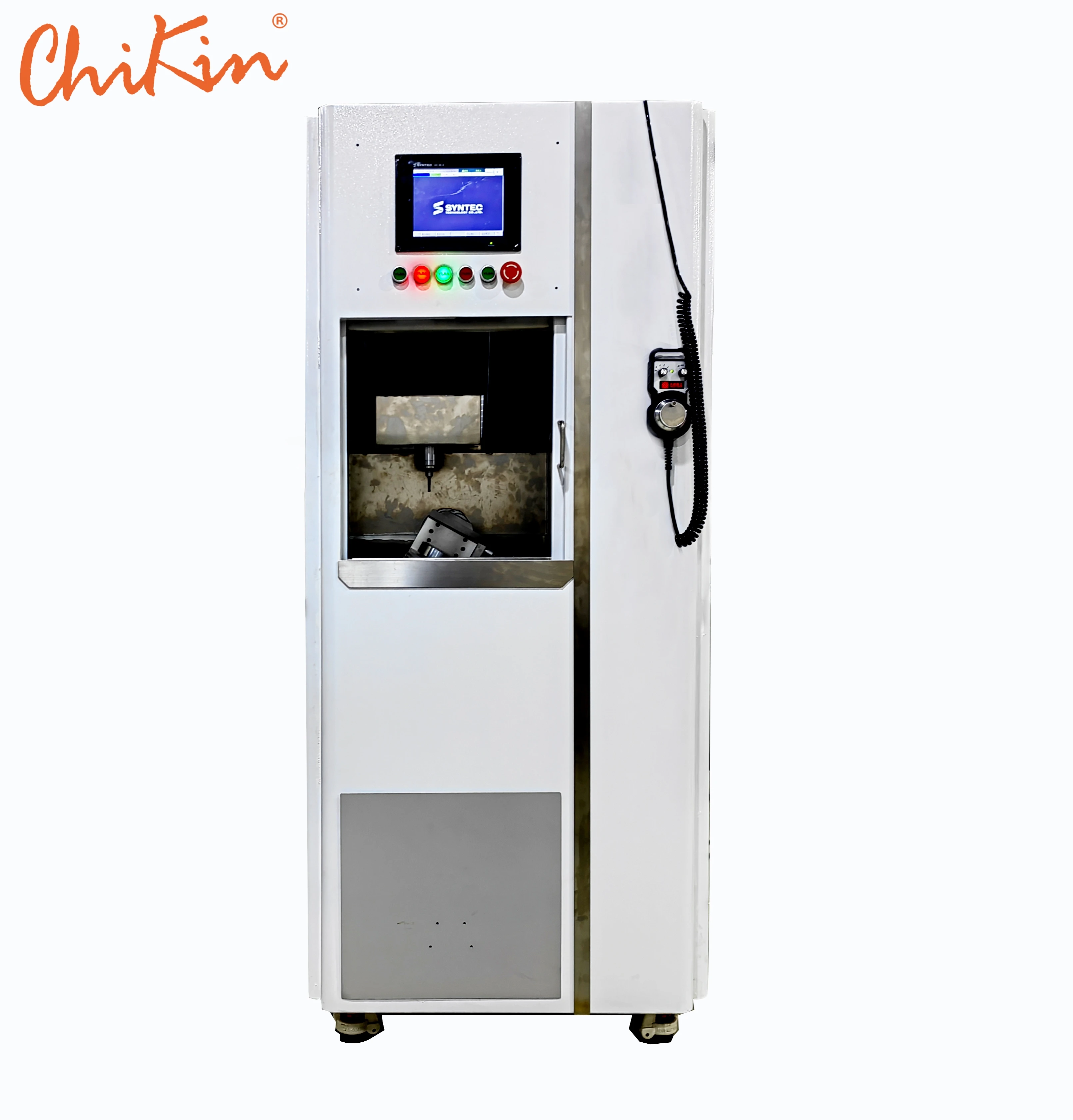
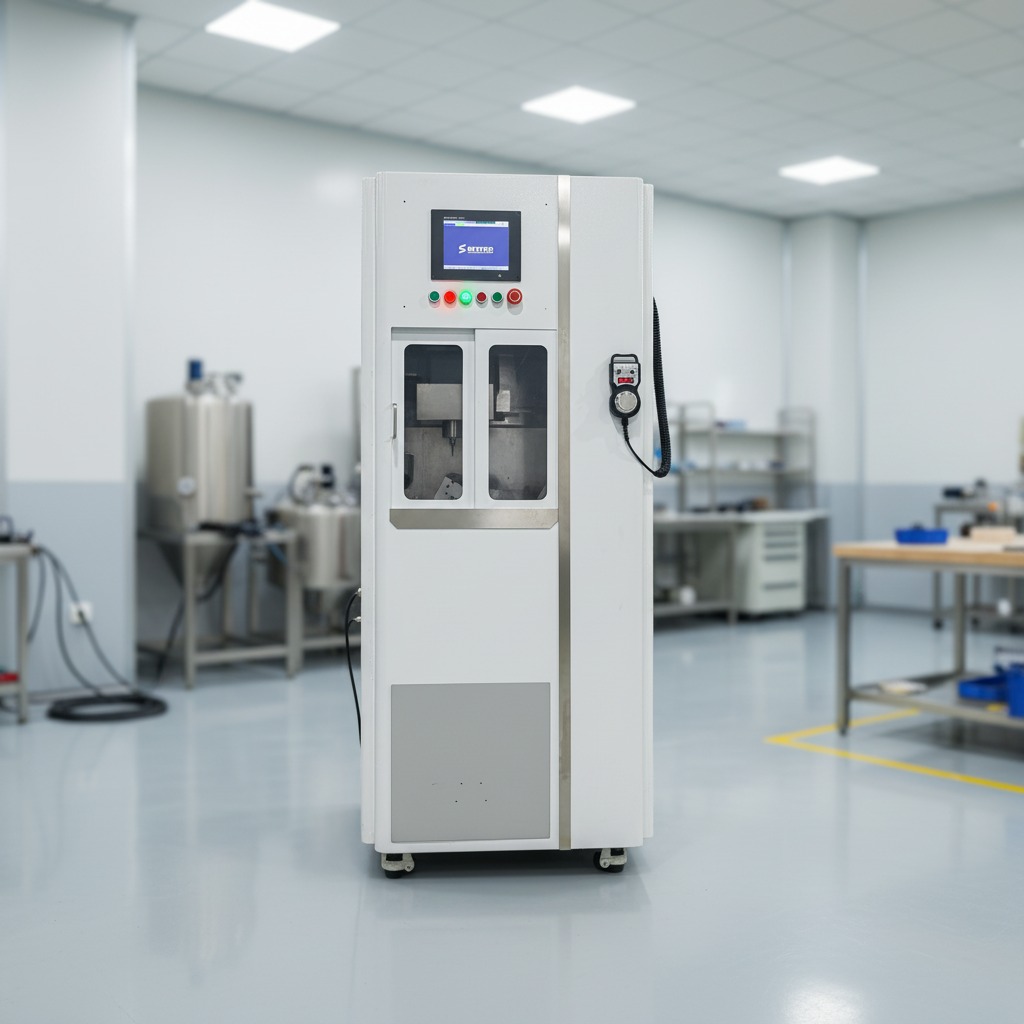
From the visible structure, the machine is built as an industrial cabinet-style system on casters, which makes it easier to position on a shop floor and integrate into an enclosed workflow. The dual viewing windows allow the operator to check the internal process without opening the door, while the control layout supports local operation and quick intervention when needed.
Product Structure and Visible Features
The machine appears as a tall rectangular enclosure in a light gray or white painted metal finish. The front section includes two vertically aligned transparent windows, likely designed to provide line-of-sight into the working area. Below the screen there is a row of push buttons and indicator lights, including a prominent red emergency-stop style button, which is a standard expectation in industrial equipment layouts.
A handheld pendant is mounted on the side with a coiled cable. This type of control device is commonly used when an operator needs to adjust motion or commands while standing near the machine. Side ventilation openings and a utility connection on the lower side suggest the cabinet is designed for powered industrial use and internal air management. Exact electrical or process specifications are not visible, so those details should be confirmed before purchase.
Key Capabilities Buyers Usually Evaluate
Controlled machining environment
An enclosed format helps contain chips, mist, or debris during machining operations. For applications that involve engraving, trimming, or light milling, this can improve workplace cleanliness and support safer observation.
Operator visibility
Windows on the front door give the operator a direct view of the process zone. That matters when a buyer wants to monitor tool path behavior, setup alignment, or workpiece status without interrupting the cycle.
Local and pendant control
The combination of touchscreen HMI, push buttons, and a side pendant supports practical shop-floor operation. In many production settings, this mix makes it easier to start, stop, adjust, or jog the machine during setup.
Possible Material and Finish Options
Because the exact processing function is not confirmed from the image, the machine itself should be evaluated as an enclosed industrial platform rather than a fixed-process tool. If configured for a CNC Engraving Machine or CNC Milling Machine role, the working outcome may depend on the tooling, spindle setup, fixturing, and the material being processed.
For buyers, material compatibility is often the real decision point. In many workshops, such equipment may be paired with plastics, acrylic, aluminum, copper, soft steel, or other machinable substrates depending on the final configuration. If the intended use is sign making or panel work, an Acrylic Engraving Machine setup may be more relevant. If the job involves tooling marks, pockets, or surface shaping on metals, a Metal Engraving Machine configuration may be the better reference.
Manufacturing and Operation Considerations
Industrial enclosed machines like this typically depend on stable frame construction, guarded access, motion control, and clear operator interfaces. For buyers, the real question is not only what the machine looks like, but how it will fit into production. Important points include how the workpiece is loaded, how the tool area is accessed, whether the cabinet supports dust extraction or chip handling, and how the control system is organized.
If you are comparing an engraving and milling platform with other shop equipment, ask whether the unit is intended for light engraving, precision milling, or another controlled process. The visible enclosure suggests it is designed for internal operations that benefit from observation and safety separation, but exact machining performance cannot be assumed from appearance alone.
Typical Application Scenarios
This type of machine is well suited to factory or workshop environments where repeatability, operator control, and process containment matter. Common use scenarios may include part marking, prototype work, controlled material removal, panel processing, and other internal manufacturing tasks that need a guarded workspace.
It is also a practical fit for businesses that value direct supervision during setup. The combination of viewing windows and local controls makes it easier to inspect the working area before committing to a cycle. That can reduce setup errors and help teams maintain consistent output across batches.
Quality Control and Buyer Decision Factors
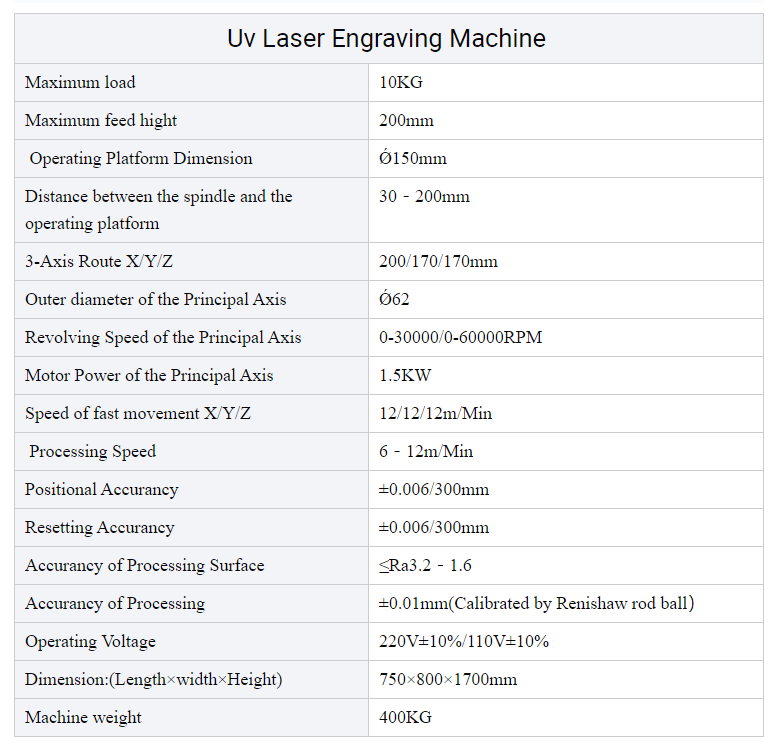
When evaluating this machine, buyers should focus on the elements that are visible and the specifications that must be confirmed. Check enclosure rigidity, door visibility, control interface clarity, mobility, ventilation arrangement, and emergency-stop access. Then verify the more critical performance data with the supplier: working range, spindle or tool system, power requirements, accuracy, supported materials, and maintenance access.
For production buyers, the best choice is the machine that matches the actual workflow, not just the headline name. If your process is mostly decorative cutting or marking, a CNC Engraving Machine setup may be enough. If your work includes heavier shaping or pocketing, a CNC Milling Machine configuration may be more appropriate.
Customization and Purchasing Guidance
Before ordering, clarify the process you want the machine to perform, the workpiece size, the control method, and any floor-space limits. If the enclosure, pendant layout, window placement, or control panel position needs to match your shop routine, ask about customization options early. That is especially important for integrated production lines or specialized fixtures.
If you need a machine for enclosed, operator-friendly processing and want to compare configuration options, send your application details and workpiece requirements. A well-matched engraving and milling platform starts with the right process definition, not just the machine shell. Contact us to discuss the setup that fits your production needs.