



Automatic Net Drawing Machine for Stable, Large-Format Material Handling
An automatic net drawing machine is built for one of the most common problems in industrial production: keeping wide, flexible materials flat, aligned, and under control while work is being done on them. Whether the material is mesh, film, fabric, or another sheet-like substrate, uneven tension can lead to wrinkles, registration drift, waste, and rework. This type of equipment is designed to address that issue with a rigid bed, perimeter clamping points, and an industrial automation layout that supports consistent handling across the full work surface.
Product Overview
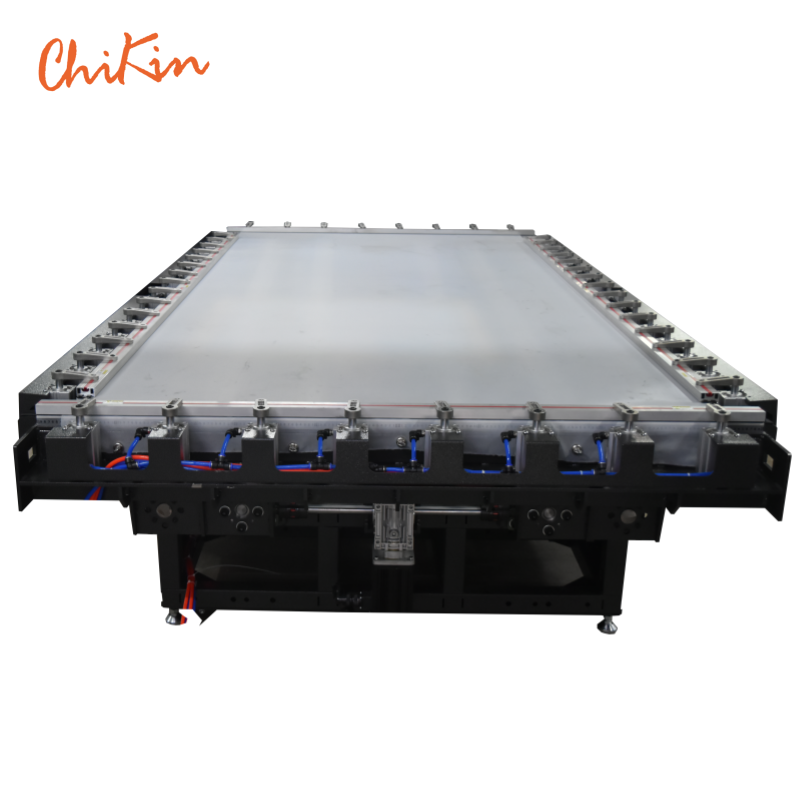
Based on the visible structure, this machine has a large rectangular working area, a heavy-duty black frame, and a top surface arranged for holding or tensioning flat materials. The perimeter includes repeated clamp or module assemblies, which suggests distributed control over the sheet or mesh being processed. Pneumatic tubing and fittings are also visible, indicating that the machine may use air-assisted actuation for clamping, positioning, or other support functions.
For buyers evaluating an automatic mesh drawing machine or related industrial net drawing equipment, the main value is not only surface size. The real benefit is controlled tension across the work zone, which helps improve consistency in downstream operations such as printing, coating, inspection, assembly, or finishing.
Machine Specification
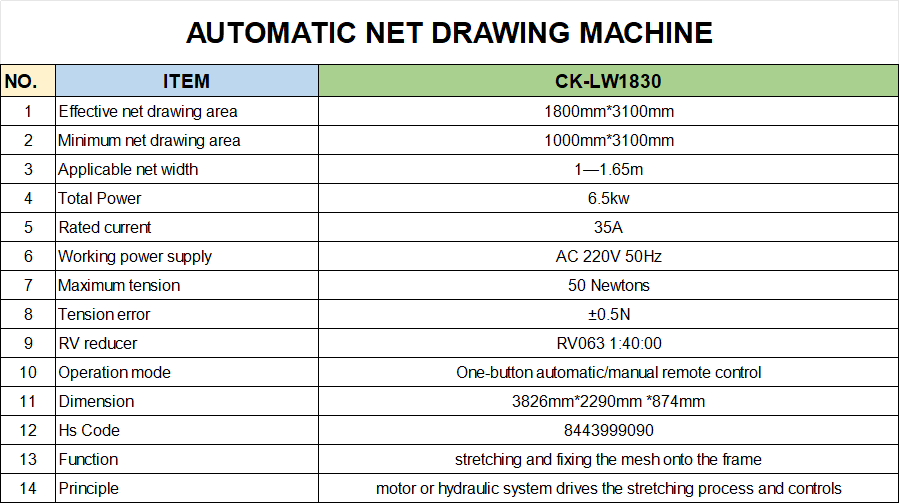
Key Capabilities and Visible Features
Large working bed
The broad horizontal platform is suited to oversized sheets and wide-format production. A larger bed helps reduce handling steps and makes it easier to process materials that would otherwise sag or distort on smaller fixtures.
Perimeter clamping and tensioning points
Repeated edge-mounted blocks and fasteners suggest modular clamping or tension control. That layout is useful when a material needs to be held evenly rather than anchored from only a few points. In many production environments, even tension is what prevents edge curl, misalignment, and uneven processing results.
Pneumatic and control hardware
The visible red and blue tubing, metal fittings, and side-mounted control area indicate a machine designed for industrial automation use. This kind of layout often supports repeatable operations and faster setup than manual fixtures.
Materials and Finish Options
The visible construction appears to rely on a rigid metal frame with a matte silver-gray top section and darker structural supports. For this type of industrial machine, buyers usually look for corrosion-resistant frame materials, wear-resistant contact surfaces, and serviceable hardware around the clamping zone. If the machine is configured as a net making machine or mesh forming machine, the actual working surface finish may vary depending on the process, but the visible goal is clearly durability and stable support.
Because exact hidden materials are not confirmed here, it is best to treat the top panel, clamp inserts, and internal actuation components as specification items to be confirmed during procurement.
Manufacturing Process and Operating Logic
Industrial flatbed systems like this are commonly used in a staged workflow. First, the operator loads the sheet, mesh, or fabric. Next, the edge clamps or perimeter modules secure the material. Then the machine maintains the required hold or tension while the production step takes place. Depending on the configuration, that step may involve printing, inspection, coating, alignment, or transfer.
This approach is valuable because it turns a difficult manual task into a repeatable fixture-based process. For manufacturers, that often means fewer rejected pieces and better line stability.
Application Scenarios
An automatic net drawing machine can fit a range of production environments where flat materials must stay stable:
• Textile and fabric handling
• Screen printing or wide-format printing support
• Mesh, film, and sheet tensioning
• Packaging and specialty substrate processing
• Electronics, semiconductor, or precision assembly support
• Inspection, coating, and finishing workflows
If your line needs a wire mesh drawing machine or a tensioning platform for large sheets, the deciding factor is usually not just size. It is how evenly the machine can secure the material and how quickly it can be set up for the next run.
Quality Control and Buyer Decision Factors
When comparing industrial net drawing equipment, buyers should focus on practical issues: frame rigidity, clamp consistency, service access, maintenance simplicity, and compatibility with the production line. A stable base reduces vibration and helps maintain alignment. Reliable tubing and fittings matter as well, especially if the system depends on pneumatic actuation.
It is also important to confirm the exact use case. The visible structure suggests a machine for large-format material handling, but the exact process—screen printing, membrane stretching, vacuum support, or another application—should be verified before purchase. That step protects the buyer from choosing a platform that is close in appearance but wrong in function.
Customization Guidance
For a custom net making machine or mesh forming machine project, useful customization points usually include working area size, clamp spacing, control style, frame height, tubing layout, and integration with upstream or downstream automation. If the machine must support a specific substrate type, buyers should also ask about surface compatibility, edge restraint, and ease of changeover between formats.
Sharing sample material dimensions, tension requirements, and line layout details helps the supplier propose a more suitable configuration. That is the fastest way to avoid over-specifying the machine or leaving critical capability gaps.
Request the Right Configuration
If you are sourcing an automatic mesh drawing machine for production use, start with the material you need to hold, the process stage it supports, and the output quality you want to protect. A properly matched platform can improve consistency immediately and reduce the hidden costs of rework, misalignment, and manual handling.
Send your application details, material size, and preferred automation level to discuss a configuration that fits your line.