




6 Cutter Auto PCB V Cut Machine for Cleaner Panel Separation
The 6 Cutter Auto PCB V Cut Machine is built for factories that need cleaner, safer, and more consistent separation of PCB panels. When manual breaking or unstable cutting starts to create edge stress, dust, or uneven break lines, production quality suffers and rework rises. This type of machine addresses that problem by giving the operator a controlled, guarded workstation for repeatable V-cut processing, with the kind of enclosed industrial layout that supports safer daily use and better process control.
Product Overview
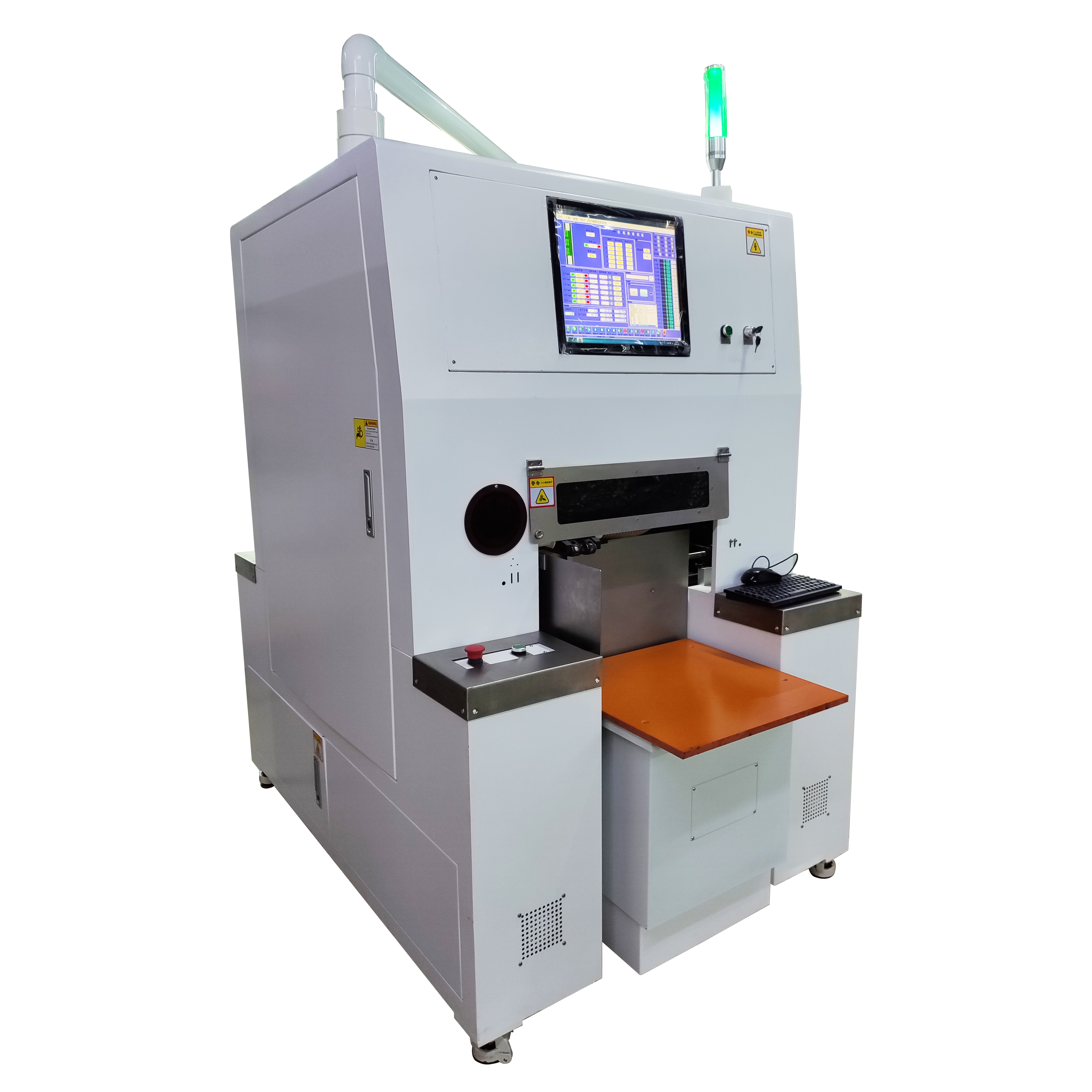
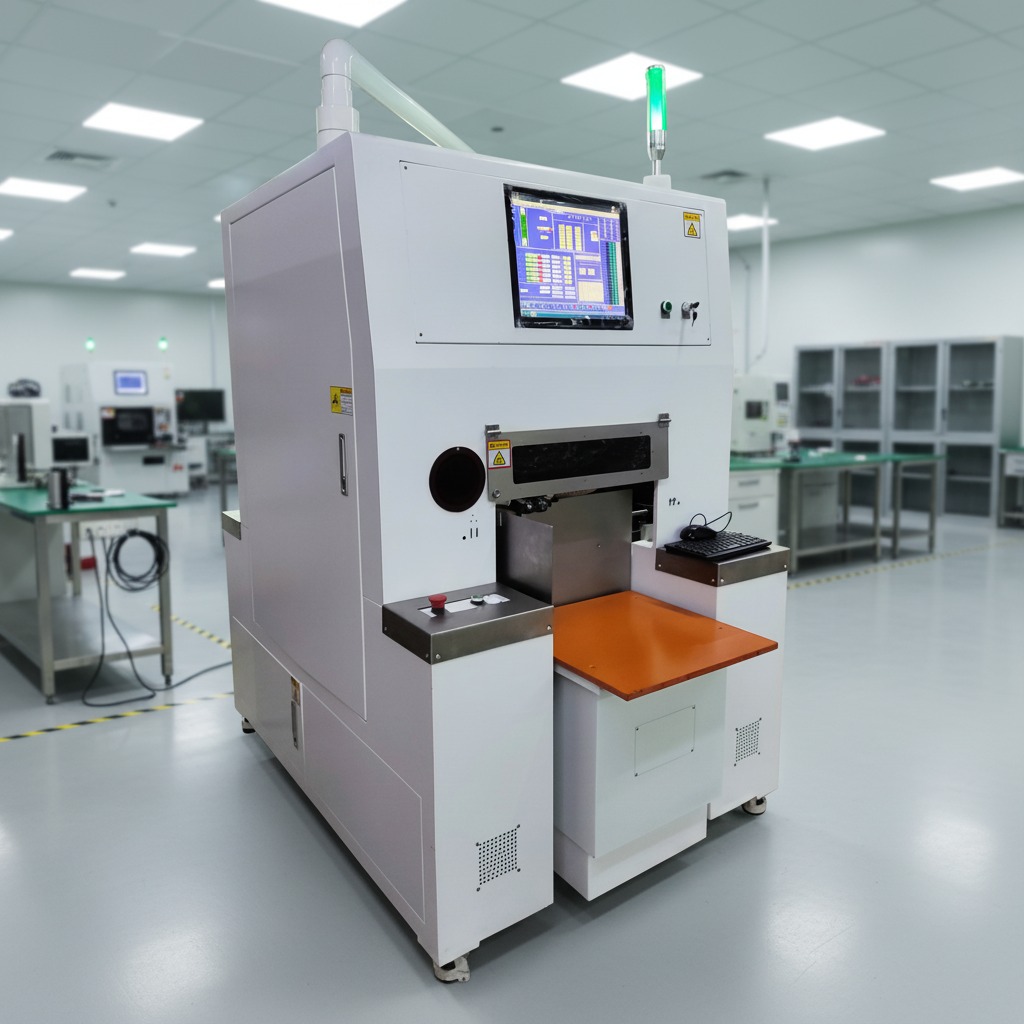
From the visible structure, this machine presents as a floor-standing enclosed industrial unit with a touchscreen HMI, status tower light, front loading area, and a protected internal work chamber. The cabinet-style body and warning labels indicate a safety-focused design for controlled production environments. For PCB manufacturers, that means a more orderly separation workflow and less dependence on inconsistent manual handling.
The model name points to a six-cutter configuration, which is valuable for buyers looking at throughput-oriented panel processing. In practical terms, a multiple blade setup can help support faster scoring or cutting cycles than a single-tool approach, especially when the workflow involves repeated board sets. The exact mechanism cannot be confirmed from the image alone, but the machine clearly belongs to the industrial class of PCB separation equipment rather than a bench-top hobby tool.
Machine Specification

Key Capabilities Buyers Care About
Controlled panel separation
As a PCB V Scoring Machine or PCB V Groove Machine, the main value is consistent V-cut formation for later board breakaway. That helps reduce operator variability and makes panel processing easier to standardize across shifts.
Enclosed operation
The visible cabinet structure gives the machine a guarded working environment. For buyers, that is important when production safety, contamination control, or operator discipline are part of the decision.
Touchscreen operation
The integrated screen suggests straightforward machine interaction for setting jobs, monitoring status, and guiding daily operation. In a factory setting, this helps simplify training and reduces the chance of setup confusion.
Status indication and utility management
The tower light, front buttons, and vent/exhaust connection show that the machine is designed for real production use. Those small details matter because they support visibility, machine awareness, and stable operation in a busy workshop.
Materials and Finish
The enclosure appears to use painted sheet metal with a light gray or white industrial finish, darker trim panels, and an orange working platform or tray. That combination is typical of factory equipment designed for durability and easier maintenance. The finish also helps the machine fit into electronics production lines, testing rooms, and dedicated process areas where clean presentation and easy wipe-down are useful.
While the image does not confirm internal tooling materials, buyers evaluating a PCB V Scoring Machine should still ask about blade material, guide rail construction, and the durability of any fixture surfaces. Those details affect long-term consistency more than appearance alone.
Manufacturing Process and Machine Structure
The unit appears to be fabricated as an integrated metal assembly, likely using standard industrial cabinet construction methods such as sheet-metal forming, fastening, painting, and electrical integration. The enclosed chamber, front access opening, side service areas, and ventilation features suggest a machine designed to support repeated loading and unloading without exposing the operator to the full process area.
For a buyer comparing an Automatic PCB V Cut Machine with other panel handling methods, the appeal is not only cutting performance but also the structure around the process. A well-designed enclosure can make workflow more predictable, especially where dust, noise, or safety rules are a concern.
Typical Application Scenarios
This kind of Multi Blade PCB Cutting Machine is a good fit for PCB production lines, electronics assembly workshops, and factory environments that handle repeated board depaneling. It may also suit small component processing or other controlled industrial tasks where an enclosed workstation is preferred. The exact internal process in this unit is not fully confirmed from the image, so it should be evaluated carefully against the buyer’s actual PCB format, panel size, and production rhythm.
For factories processing large volumes of panels, a PCB V Scoring Machine can help create a more stable separation step between fabrication and downstream assembly. For smaller workshops, the benefit may be better control and reduced manual strain.
Quality Control and Buyer Decision Factors
When selecting a 6 Cutter Auto PCB V Cut Machine, buyers should look beyond the basic model name and focus on the practical details that affect daily output. Important points include enclosure safety, ease of loading, control interface clarity, maintenance access, and whether the cutting or scoring system matches the board material and panel design. If the machine is intended as a PCB V Cut Separator, the actual tool configuration, alignment method, and serviceability should be reviewed before purchase.
Because some visible features suggest a guarded industrial processing station rather than a purely open cutting unit, it is smart to confirm exact application, working range, and supported PCB thickness directly with the supplier. That is the safest way to avoid buying equipment that looks suitable but does not fit the production process.
Customization Guidance
For different factories, customization may involve the cutter layout, worktable style, loading direction, safety interlocks, control language, exhaust connection, and cabinet layout. If your line needs a specific PCB V Cut Separator configuration, ask for details on board dimensions, fixture compatibility, and operator access. If the machine will run alongside inspection or marking equipment, the enclosed form factor may also make integration easier.
Why This Machine Is Worth Considering
Buyers who want repeatable PCB panel separation usually need three things: stable process control, safe operation, and a machine layout that fits the shop floor. The 6 Cutter Auto PCB V Cut Machine shows the structural features that support those goals. It is not just a cutting concept; it is an enclosed industrial workstation built for disciplined production use.
If you are comparing automatic depaneling options, this is the type of machine worth shortlisting. Share your PCB size, panel layout, and production target, and request a configuration matched to your workflow.
Request a Quote
Contact us with your panel drawings and process needs to discuss the right Automatic PCB V Cut Machine configuration for your factory.