



PCB Coated Router Bit Overview
A PCB coated router bit is used when a shop needs clean, repeatable machining on small and delicate features without burning through tools too quickly. In PCB fabrication, prototype work, and precision micro-machining, the main pain points are burrs, tool wear, and inconsistent edge quality. A coated cutting tool can help improve surface finish stability and reduce friction during routing, drilling, or fine contour work, especially when the job involves thin material or a high number of repeated cuts.
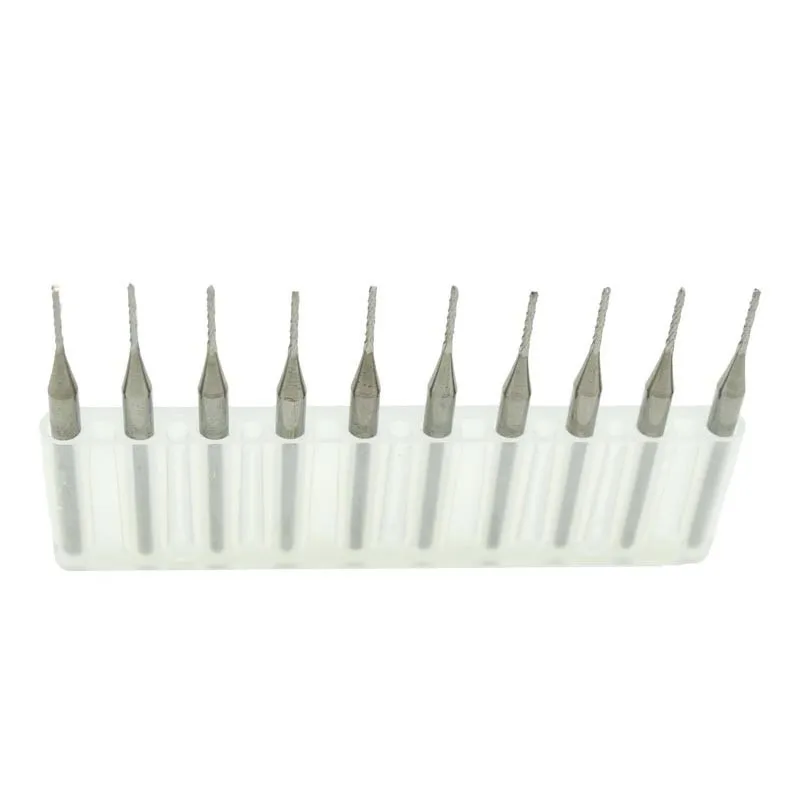
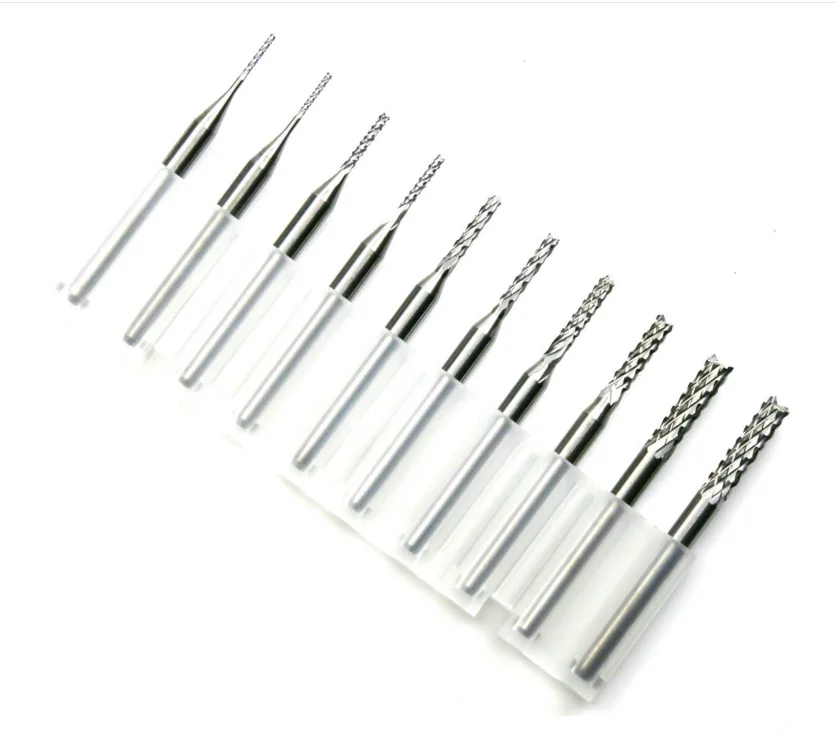
The tool set shown here appears to include multiple small rotary cutters and drill-style tools stored individually in clear plastic sleeves. The visible mix of black-coated, silver, and iridescent coated tools suggests a range of surface treatments and possibly different geometries for drilling, milling, and engraving tasks. Exact dimensions and substrate cannot be confirmed from the image, so selection should be based on the actual workpiece, spindle speed, and required feature size.
Product Reference
This product category covers precision tooling for CNC routing, micro drilling, slotting, and edge finishing. In practice, a PCB router drill bit or PCB milling bit is chosen for small-diameter cuts where accuracy matters more than heavy stock removal. Tools like these are commonly used in electronics production, fixture making, model work, and detailed machining of plastics and soft metals.
The visible packaging also matters. Individual tubes protect the cutting edges during transport and storage, which helps prevent chipping, edge damage, and accidental contact with other tools. For buyers managing multiple tool types in one shop, organized packaging reduces setup mistakes and makes it easier to track replacement tools.
Key Capabilities and Tool Characteristics
Small-diameter precision cutting
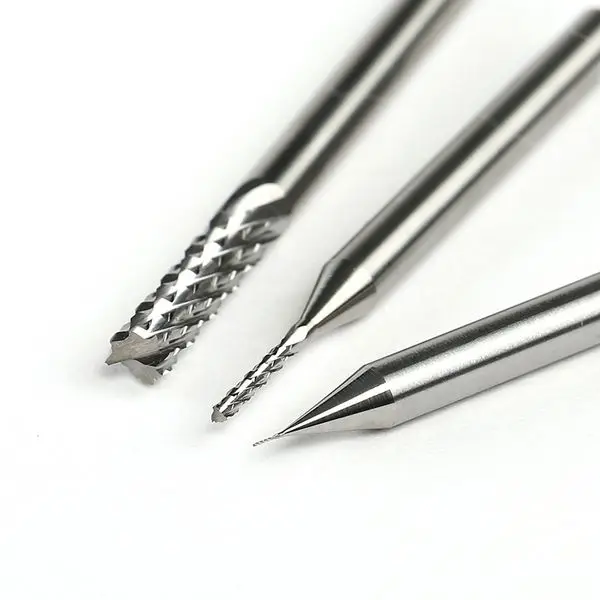
The tools are designed for fine machining rather than aggressive material removal. That makes them appropriate for narrow slots, small holes, contour passes, and detailed surface work. A PCB drilling bit is typically selected when clean entry holes are needed, while a PCB milling bit or PCB CNC bit is more suitable for routing paths, pocketing, and edge trimming.
Visible geometry options
From the image, some tools appear drill-like with pointed tips, while others look more like spiral end mills. That mix suggests a set meant for different machining tasks. A PCB engraving bit may be useful for very fine lettering, isolation lines, or decorative micro features, while a router-style cutter is better for broader cuts and profiling.
Coating and wear resistance
Several tools show dark or multicolor coatings. Coatings of this kind are often used to reduce friction, support heat management, and extend service life. Because the exact coating cannot be verified from the image, buyers should confirm the surface treatment before matching the tool to a specific material or spindle condition.
Materials and Finish Options
Visible finishes include plain metal and coated surfaces. In manufacturing, these tools may be made from different base materials such as HSS or carbide, but the image alone does not confirm which one is present. The surface finish can influence chip evacuation, resistance to wear, and how the tool behaves in sticky or abrasive materials.
For PCB work, the right finish should be selected along with the correct diameter and geometry. For example, a PCB router drill bit used on composite board or FR-style material needs stable sharpness and controlled runout, while a tool intended for plastic may prioritize smooth chip flow and lower cutting force.
Manufacturing and Process Considerations
Precision cutting tools like these are typically produced through flute grinding, point forming, sharpening, and optional coating. Consistency in edge formation is important because even small variations can affect cut quality, tool life, and dimensional repeatability. After processing, protective sleeves or tubes help keep the cutting edges intact during packing and shipping.
Application Scenarios
These tools are suitable for CNC shops, prototyping labs, maintenance departments, and toolrooms. Common uses include PCB routing, drilling small holes, engraving alignment marks, trimming plastic parts, contouring thin sheet materials, and machining small features in soft metals. Depending on the actual material grade and geometry, some versions may also be used in wood or composite work.
Quality Control and Buying Factors
When evaluating a PCB coated router bit, buyers should check tool diameter, shank size, flute style, coating type, and the intended work material. Runout control, packaging quality, and edge protection also matter for small tooling. If the project involves repeated production runs, ask for the recommended spindle speed range and feed guidance from the supplier.
Before ordering, confirm whether you need a PCB router drill bit for through-holes, a PCB milling bit for routing, or a PCB engraving bit for fine surface detail. Matching the tool to the operation is often more important than simply choosing the hardest coating.
Customization and Procurement Guidance
For buyers sourcing in volume, customization may include tool diameter, shank length, flute count, coating choice, and packaging format. If your process uses a specific machine or board material, provide the application details so the toolmaker can recommend the most suitable geometry. That helps reduce trial-and-error and lowers the chance of premature wear or poor edge quality.
Request a Quote
If you are comparing precision tools for PCB routing, drilling, or engraving, share your workpiece material, feature size, and machine type. A well-matched PCB coated router bit can simplify setup, improve cut consistency, and support longer tool life in daily production.