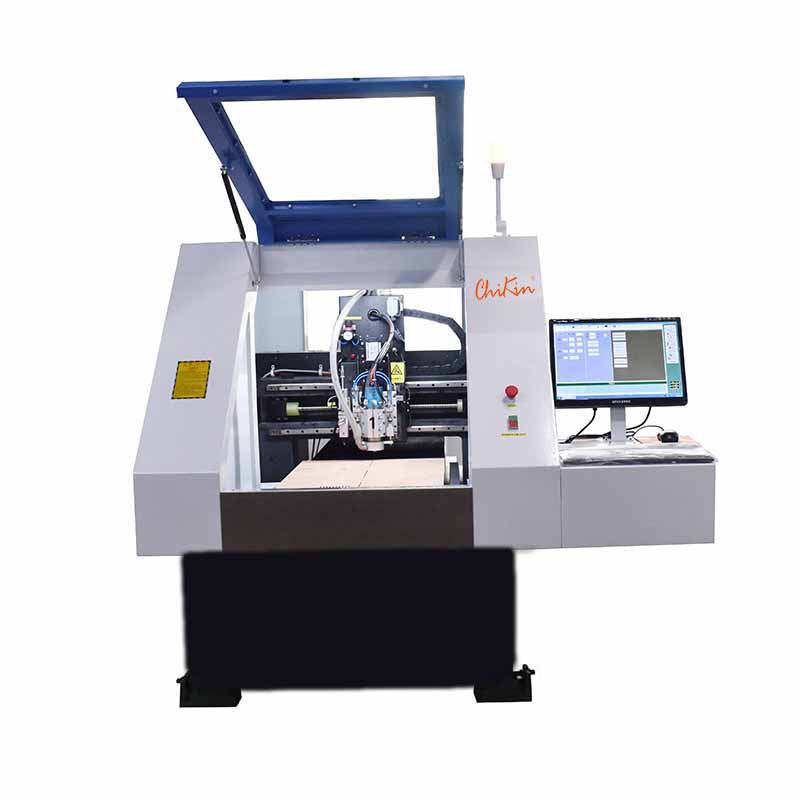




Single Spindle PCB Drilling Machine Overview
A Single Spindle PCB Drilling Machine is used when a production line needs controlled hole making without the complexity of a multi-spindle system. For buyers, the real problem is often consistency: drilled holes must stay aligned, clean, and repeatable from board to board so downstream plating, insertion, and assembly can proceed without delays. In electronics manufacturing, that means reducing rework, protecting panel quality, and keeping prototype or small-batch runs moving smoothly.
Although machine layouts vary, a single-spindle format is typically chosen for focused precision work, smaller production volumes, sample processing, or flexible shop-floor tasks. It is a practical option when a factory needs dependable PCB drilling machine performance in a compact footprint and wants direct operator control over each job.
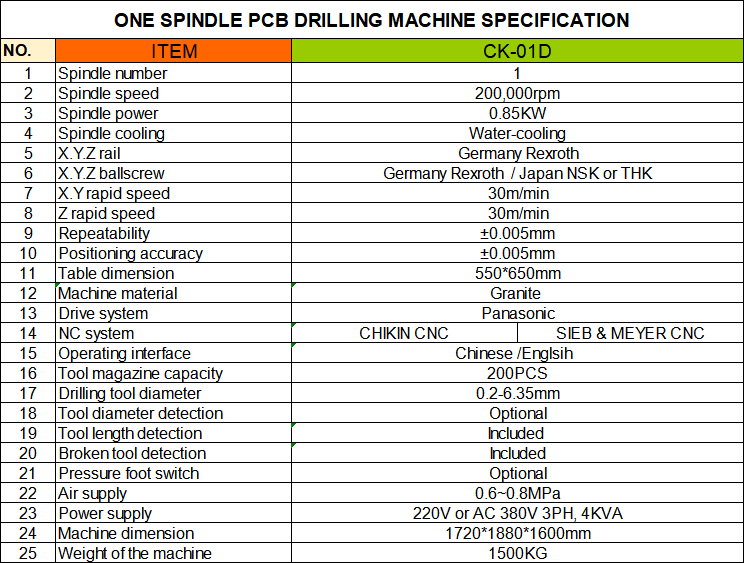
Machine Specification
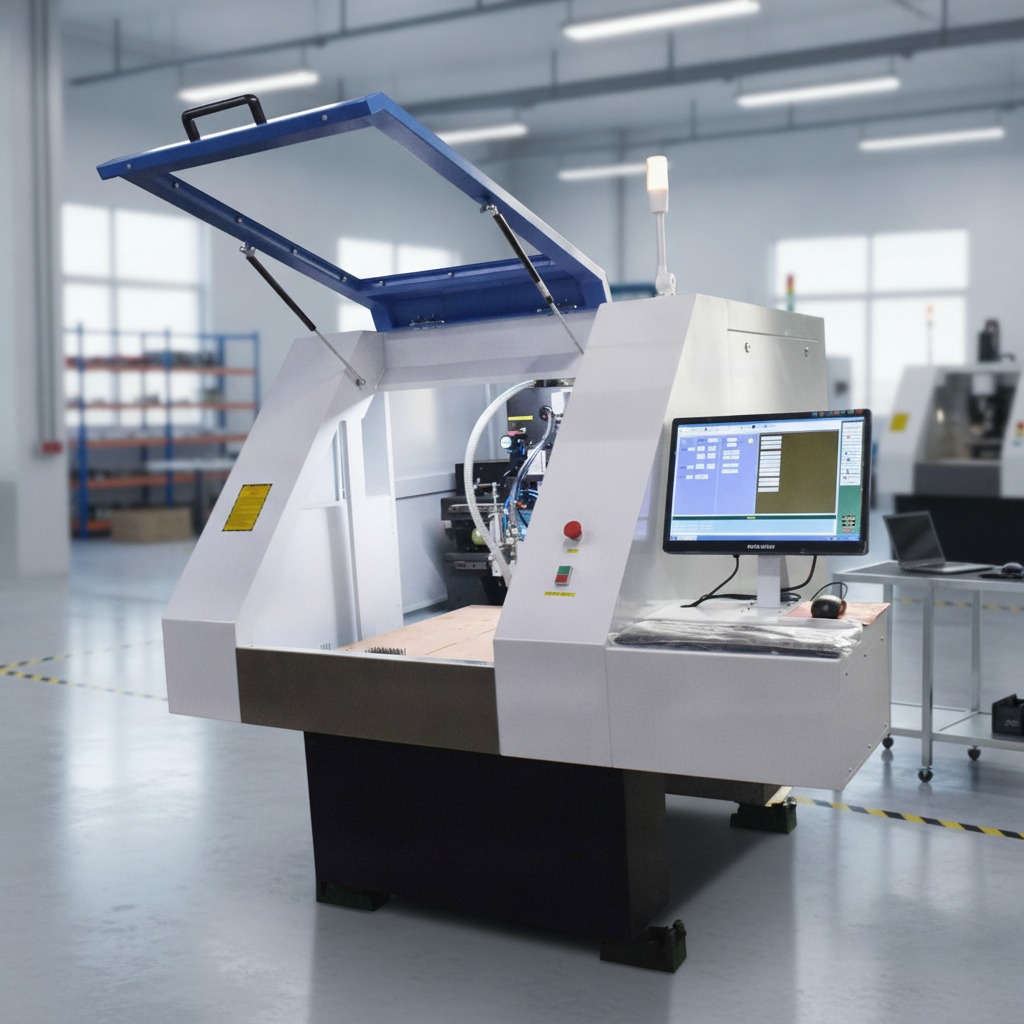
Product Reference and Working Principle
At its core, this type of equipment positions a PCB panel or individual board on a fixture and processes hole locations using a single drilling head. The motion system guides the tool to each coordinate under CNC control, supporting repeatable printed circuit board drilling for vias, component lead holes, tooling holes, or other board features. In a production setting, the value comes from stable positioning, clean hole edges, and a workflow that is easier to supervise than a larger automated line.
Depending on the exact configuration, a single spindle system may be used for automated PCB drilling in a controlled workshop or as a support machine for sampling and rework. Some models are built around mechanical drilling, while others are designed for precision processing in adjacent PCB workflows. Because the supplied data does not confirm every internal specification, buyers should confirm the exact process method before selecting tooling or planning production capacity.
Key Capabilities Buyers Usually Evaluate
Controlled drilling accuracy
For circuit board work, repeatability matters as much as raw speed. Buyers usually look for tight coordinate movement, stable spindle behavior, and reliable hole placement across multiple boards. These qualities help protect registration and reduce scrap in the PCB manufacturing machine environment.
Flexible job setup
A single spindle format often appeals to teams that change jobs frequently. It can be easier to prepare for prototypes, small batches, repair work, or short production runs where frequent changeover would slow a larger line. This makes it a useful choice for electronics labs, development shops, and small-to-medium manufacturing cells.
Operator-friendly control
Machine operation is typically centered on a CNC interface, fixture setup, coordinate programming, and job monitoring. For buyers comparing a CNC PCB drilling machine, the control system and ease of program handling often matter as much as the mechanical frame itself.
Materials, Fixtures, and Finish Considerations
PCB drilling equipment is usually paired with fixtures and tooling suited to laminate boards, copper-clad panels, and related electronic substrates. The machine frame itself is commonly built from industrial metal construction designed for rigidity and stable alignment. Buyers should also consider workholding method, vacuum support if available, drill bit compatibility, and dust or chip extraction planning.
For finished boards, the quality of the hole matters: clean entry, minimal burrs, and accurate spacing all affect plating and assembly. A good PCB hole making machine setup supports that result by holding the board firmly and keeping motion smooth during each cycle.
Manufacturing Process and Workflow
Typical operation starts with program preparation, followed by board loading and fixture alignment. The machine then executes the hole pattern through programmed coordinates. In a PCB shop, that sequence can be part of a larger panel workflow that includes imaging, drilling, plating, deburring, inspection, and routing. For manufacturers, the advantage is not just automation but rhythm: each board follows the same controlled sequence, which helps standardize output.
When used correctly, a PCB drilling machine becomes a reliable bridge between design data and physical board fabrication. It helps transform a layout file into precise mechanical features that support later assembly steps.
Application Scenarios
This equipment is commonly considered for electronics manufacturing, prototype workshops, PCB sample rooms, repair operations, and teaching labs. It can also support small-batch runs where a full multi-spindle system would be unnecessary. In practical terms, buyers use it for board hole preparation, traceable sample production, and other precision tasks inside a PCB manufacturing machine workflow.
For companies comparing machining options, a single spindle unit can also fit into mixed production environments where flexibility matters more than maximum throughput. That is especially true for teams handling product development, validation samples, or custom order work.
Quality Control and Buyer Decision Factors
When selecting a machine, buyers should review spindle stability, coordinate repeatability, fixture quality, software compatibility, operator safety, and service support. For PCB production, hole consistency is central, so inspection methods and maintenance access are also important. If the machine is used in a busy factory, enclosure design, emergency stop access, and clean cable routing can make daily operation easier and safer.
It is also wise to match the machine to the real production target. A printed circuit board drilling system for prototypes does not need the same throughput profile as a high-volume line. By defining job size, board type, and acceptable process time in advance, buyers can choose a better-fit machine and avoid over-specifying the purchase.
Customization Guidance
Because PCB drilling needs vary, customization may involve fixture design, control interface preferences, spindle/tool compatibility, motion travel, dust collection interface, and software integration. Buyers should prepare board dimensions, hole count ranges, material stack-up, and expected shift usage before requesting a configuration. Clear application data helps the supplier recommend the right PCB hole making machine setup rather than a generic package.
Request a Quote or Technical Discussion
If you are comparing a Single Spindle PCB Drilling Machine for prototype work, small-batch output, or controlled board hole preparation, share your board size, process goal, and production volume. With those details, a suitable configuration can be matched more accurately. Contact us to discuss your PCB drilling application and choose the right machine for your line.