



Brush for Routing and Drilling Machine Overview
A Brush for Routing and Drilling Machine is used to clean, deburr, and finish workpieces during routing or drilling operations, helping buyers solve a common production problem: chips, dust, burrs, and surface residue that reduce part quality and slow down downstream assembly. This type of brush can support cleaner edges and more controlled surface contact around holes, slots, and contoured features, especially where a compact ring-shaped tool is easier to position than a flat brush or hand tool.
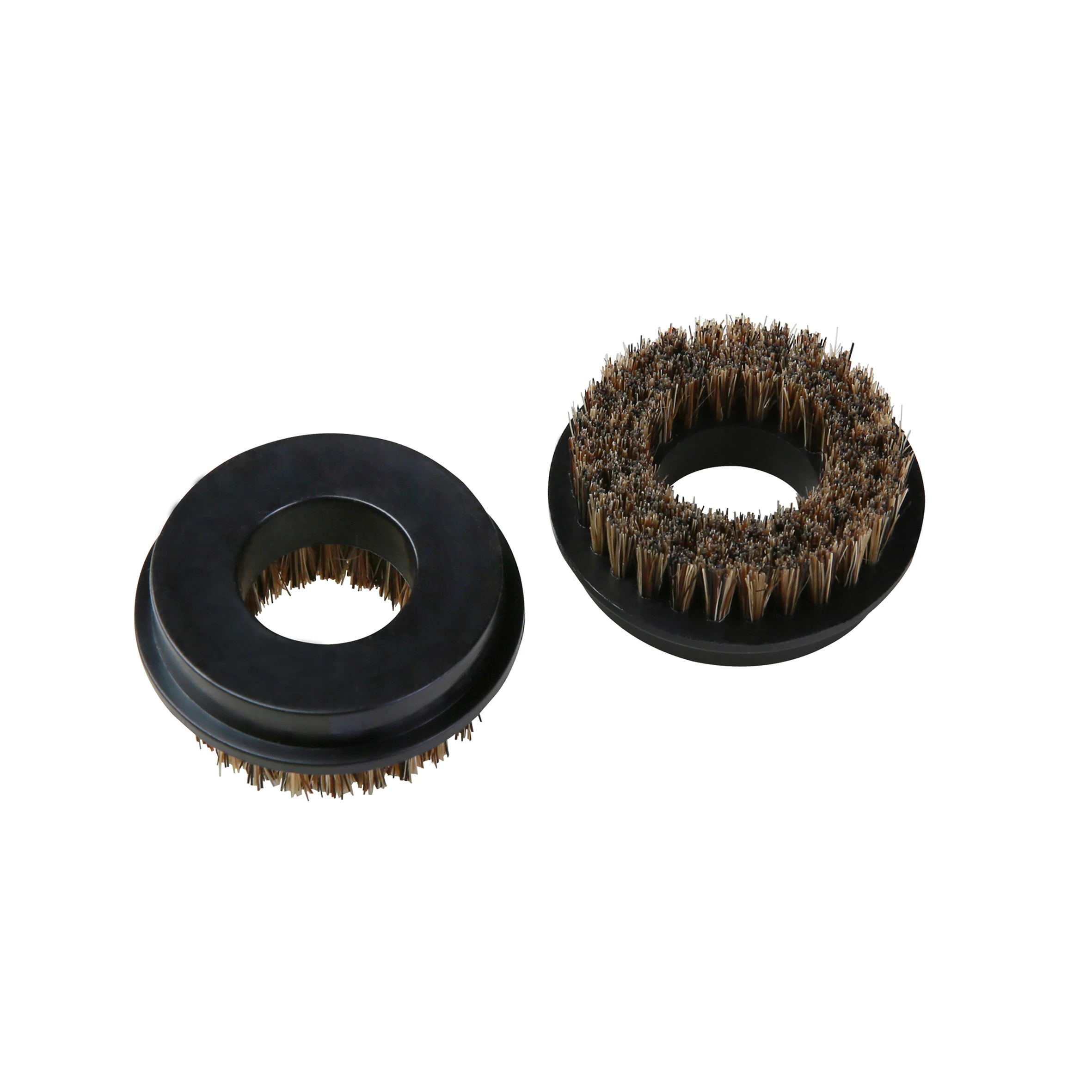
Based on the visible product form, this is a circular ring brush with a central through-hole and a dense bristle fill around the inner circumference. The compact geometry suggests a practical fit for pass-through or mounted use in industrial setups where the brush must surround a shaft, guide, or workpiece path.
Product Structure and Visible Features
The brush has a donut-shaped profile with a flat black outer body and tightly packed bristles or abrasive filaments. One unit also appears to have bristles extending from the underside, which may indicate a layered contact design for more than one touch point. The uniform ring layout is useful when a tool must maintain consistent contact around a circular area.
From the image alone, the carrier body appears to be made from black plastic or a coated metal base. The filaments look brown or tan, but the exact fiber material cannot be confirmed. Because the mounting style is not fully visible, the part should be treated as a brush component for industrial use rather than assigned to a specific machine model.
Key Capabilities
Surface cleaning and residue removal
A machine cleaning brush in ring form can remove dust, loose scale, machining residue, and light contamination from work surfaces. This is helpful when parts leave the routing or drilling station and need a cleaner edge before inspection, coating, or assembly.
Light deburring and edge conditioning
For holes, openings, and machined edges, a routing machine brush or drilling machine brush may help soften sharp burrs and reduce edge irregularity. It is commonly considered when the goal is light finishing rather than aggressive stock removal.
Compact pass-through layout
The center hole makes the design suitable for shaft-guided or workpiece-guided arrangements. That can simplify integration in fixtures where a cnc machine brush must stay compact and low profile.
Materials and Finish Options
Only visible facts can be stated with confidence: the brush has a dark matte to semi-matte outer housing and dense brown/tan bristles. The carrier may be plastic or coated metal. The filament type is not identifiable from the image, so buyers should confirm whether the brush uses natural fiber, synthetic filament, or an abrasive-coated material.
Finish options for products in this category typically focus on carrier material, filament density, and edge profile. Those choices affect how the brush feels against the part, how long it lasts, and whether it is better suited to cleaning, polishing, or light abrasive contact.
Manufacturing and Assembly Considerations
This type of industrial brush component is commonly produced through a controlled assembly process that may involve molding, inserting, and securing bristles into a carrier body. For buyers, the important points are not hidden manufacturing details but the resulting construction: stable geometry, consistent bristle packing, and dependable retention during operation.
When selecting a routing machine brush for production use, it is worth checking how the brush is mounted, whether it runs rotary or stationary, and how the contact face is positioned relative to the workpiece. Those factors influence wear and cleaning consistency.
Typical Application Scenarios
This brush style is often used in routing and drilling workflows where circular access matters. Common scenarios include cleaning around round parts, removing light burrs from drilled holes, conditioning edges after machining, and supporting general industrial maintenance. In some setups, a cnc machine brush may also be used for part cleaning before packaging or inspection.
It may also be suitable where a ring-shaped contact zone is needed to follow the contour of a workpiece while keeping the center open for clearance, alignment, or pass-through motion.
Quality Control and Buyer Checks
Because exact size and filament specifications are not visible, buyers should confirm the critical fit and performance points before ordering: center hole size, outer diameter, brush height, filament stiffness, and carrier compatibility. If the brush will touch finished surfaces, ask about the filament type and whether it is intended for cleaning, deburring, or abrasive finishing.
For industrial use, also verify balance, bristle retention, and whether the mounting method matches your routing or drilling fixture. A well-made brush should present a uniform ring, consistent filament distribution, and no obvious gaps in the fill.
Customization Guidance
Customization can be important when a machine cleaning brush must match a specific workpiece or tool path. Buyers may need changes in diameter, bore size, bristle density, carrier color, material selection, or contact length. If the application involves frequent wear, ask for a construction that supports replacement or repeatable installation.
For harsher jobs, a firmer filament or abrasive variant may be appropriate. For delicate parts, a softer brush may be better. The right specification depends on the part surface, the amount of burr to remove, and the required finish.
Choosing the Right Brush
When evaluating a Brush for Routing and Drilling Machine, start with the workpiece geometry and the finishing goal. A compact ring brush is a good choice when the brush must fit around a shaft or opening. Next, confirm whether you need cleaning, deburring, or polishing-like contact, since that determines the filament type and stiffness. Finally, check mounting compatibility so the brush fits the existing machine setup without adaptation issues.
Request More Information
If you need a brush matched to your routing, drilling, or cleaning process, share your machine type, mounting constraints, and target application. We can help narrow down the right configuration for industrial use and advise on the most suitable brush structure for your part geometry.