




Laser Repair Service for Industrial Laser Modules and Control Units
A laser repair service helps manufacturers restore production equipment when a laser source, control unit, or power module starts to fail. In industrial settings, downtime can stop marking, welding, cutting, alignment, or lab work, so repair is often the fastest way to get a system back into service without replacing every component. For equipment built in a rugged box-style enclosure with fan cooling, external connectors, and control buttons, the first priority is usually to diagnose the fault at module level and confirm whether the issue is electrical, optical, or related to cooling and interlock control.
This service page applies to Coherent-branded industrial laser assemblies and similar electro-optical modules used in OEM systems. The visible equipment characteristics suggest a controlled industrial platform with status indicators, enable controls, shutters, and connectorized interfaces. Because exact model data and performance values are not readable from the image, the correct approach is careful inspection, functional testing, and component-level troubleshooting rather than assumptions about wavelength, power, or laser type.
What This Type of Repair Covers
Industrial laser equipment usually combines optics, electronics, cooling, and safety logic inside one enclosure. When one part fails, the whole system may lock out or run inconsistently. A proper laser equipment repair process typically covers power input checks, interlock verification, fan and thermal inspection, connector condition, control-panel response, and output-related diagnostics where safe and possible.
For the visible module style shown here, the most common service focus is on the enclosure, controls, fan system, cable interfaces, and internal board or source-side faults. If the unit is part of a larger machine, laser system repair may also include communication checks with the host controller and inspection of mating connectors, brackets, and mounting points.
Visible Product Characteristics
Enclosure and handling features
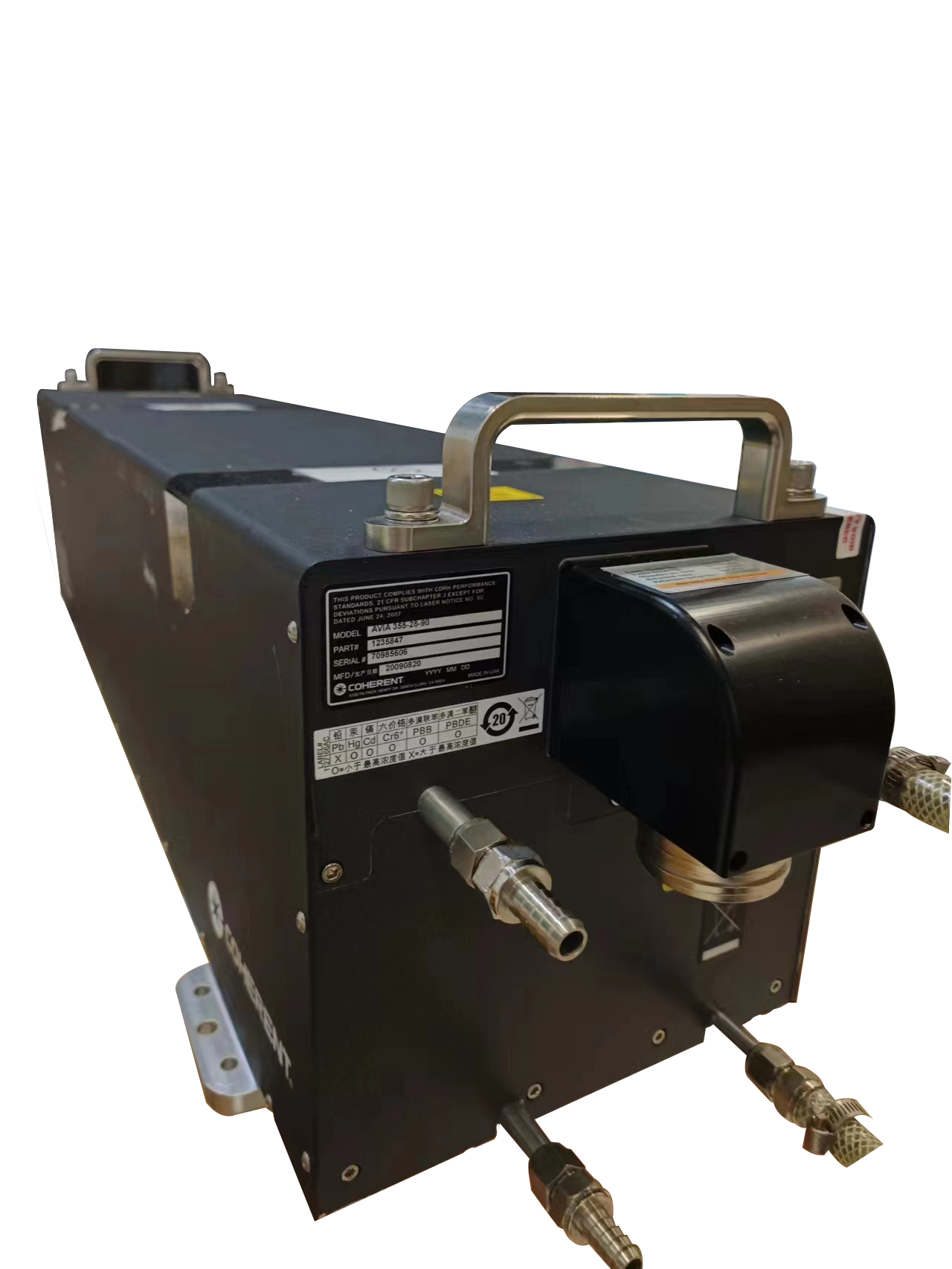
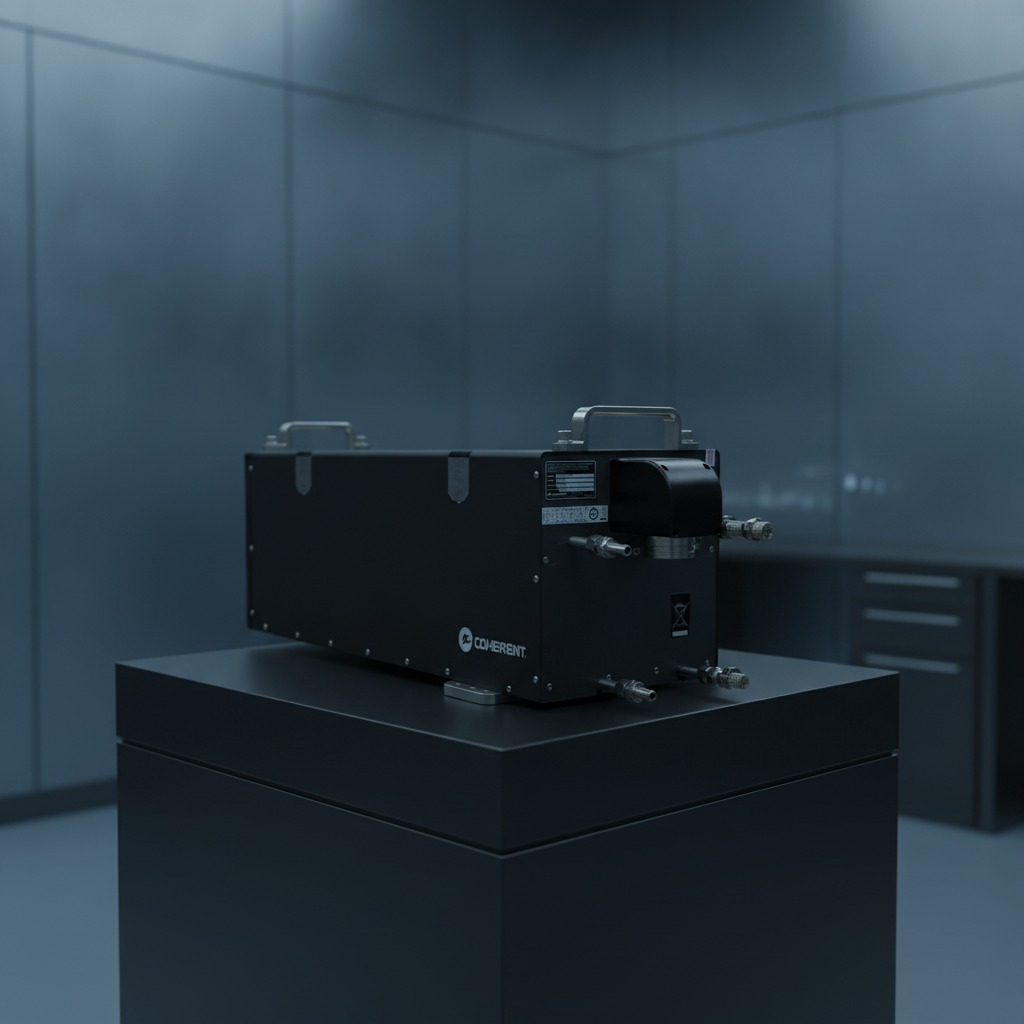
The unit appears to use a black painted metal housing with a rectangular industrial form factor. Integrated top handles make handling and service removal easier, while bolted panels indicate an enclosure designed for maintenance access. These details matter in repair because service technicians often need to remove, inspect, and reinstall the module safely.
Controls and interfaces
On the control-side unit, visible front-panel items include an LCD or display window, status LEDs, membrane buttons, a rotary control, and fan ventilation. Labeled functions such as diode on/off, pulse on, shutter open, laser emission, standby, and laser enable suggest the module is built for controlled operation and safety monitoring. For repair work, those indicators are useful because they help isolate whether the fault sits in the operator interface, the enable chain, or the internal electronics.
Common Service Capabilities
A practical laser maintenance service usually starts with non-invasive checks before any deeper disassembly. Typical capabilities include:
• Visual inspection of connectors, ports, wiring, and mounting points
• Cooling fan and airflow verification
• Power supply and control logic troubleshooting
• Interlock, shutter, and enable circuit checks
• Cleaning and reseating of external interfaces where appropriate
• Component-level diagnosis of internal boards or source assemblies
• Reassembly and operational validation after repair
Because the exact internal architecture is not confirmed, an experienced technician should avoid guessing at diode, fiber, CO2, or solid-state construction until the unit is opened and identified.
Materials, Finish, and Build Considerations
The visible construction appears to be industrial sheet metal with a painted or powder-coated black finish. That type of housing is common in laser machine repair work because it protects internal electronics from handling damage and supports repeat service access. Metal panels, vent grilles, warning labels, and quick-connect style fittings also point to a design intended for controlled equipment environments rather than standalone consumer use.
When evaluating industrial laser repair, the housing condition matters. Bent panels, stripped fasteners, overheated areas, corrosion, or cracked connectors can all indicate deeper faults. A repair plan should therefore include mechanical inspection as well as electrical testing.
Where These Units Are Commonly Used
Based on the visible form factor and control features, this category of equipment may support industrial laser processing, laboratory optics, materials work, alignment/testing, or OEM integration. It may also be used inside larger automated production systems where reliable shuttering and emission control are essential. Exact application cannot be confirmed from the image, so the safest assumption is that the unit belongs to a professional controlled environment with serviceable modules.
Quality Control After Repair
Quality control in a laser repair service should focus on safe function, stable operation, and interface integrity. That usually means confirming that the fan system runs correctly, buttons and indicators respond as expected, connectors are secure, and the system transitions cleanly through standby, enable, and emission states. If output testing is part of the scope, it should be performed only with proper equipment and within the limits of the identified model.
For buyers, the key decision factor is not just whether the unit powers on, but whether it behaves consistently under load and communicates properly with the host system. That is especially important in laser system repair, where a partial fix can still leave production vulnerable to repeated downtime.
Customization and Support Guidance
Customization in this category usually means adapting the service plan to the actual condition of the unit. Some customers need only connector replacement or control-board troubleshooting. Others require full industrial laser repair, including internal cleaning, fan service, interface repair, and integration checks with upstream equipment. If you can share the model number, fault symptoms, warning codes, photos of connectors, or the machine’s operating context, the repair approach can be narrowed quickly.
What Buyers Should Prepare Before Requesting Service
To speed diagnosis, provide the equipment nameplate details, visible fault messages, symptom history, and whether the issue appears during startup, emission, or cooling. Mention any recent events such as power loss, overheating, contamination, connector damage, or alarm lockouts. For OEM and lab users, it also helps to note whether the unit is a source module, control/power unit, or a connected subsystem inside a larger machine.
Request Laser Repair Support
If your industrial laser module, control unit, or enclosed power/electronics assembly is failing, a structured laser repair service can help isolate the problem and reduce equipment downtime. Share the model information and fault symptoms, and the unit can be evaluated for repair, maintenance, or integration support.