



Product Overview
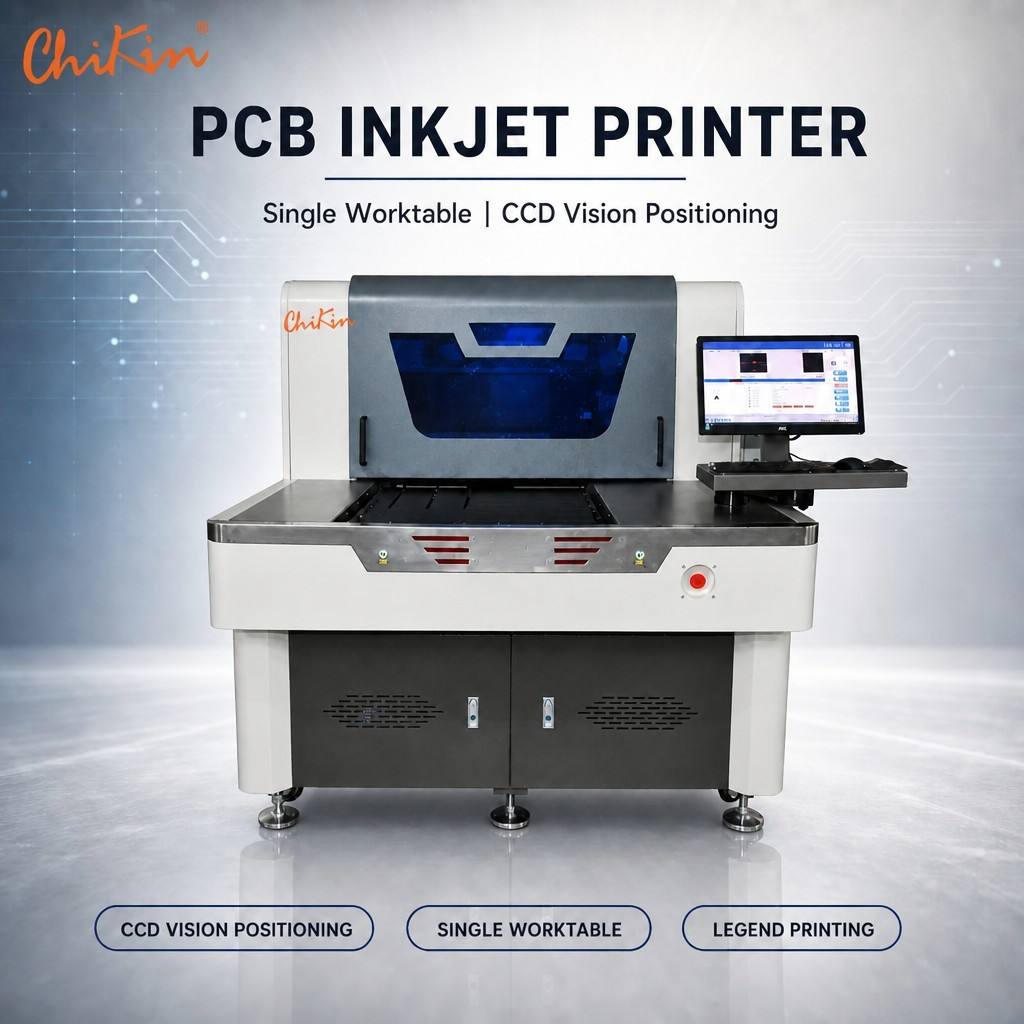
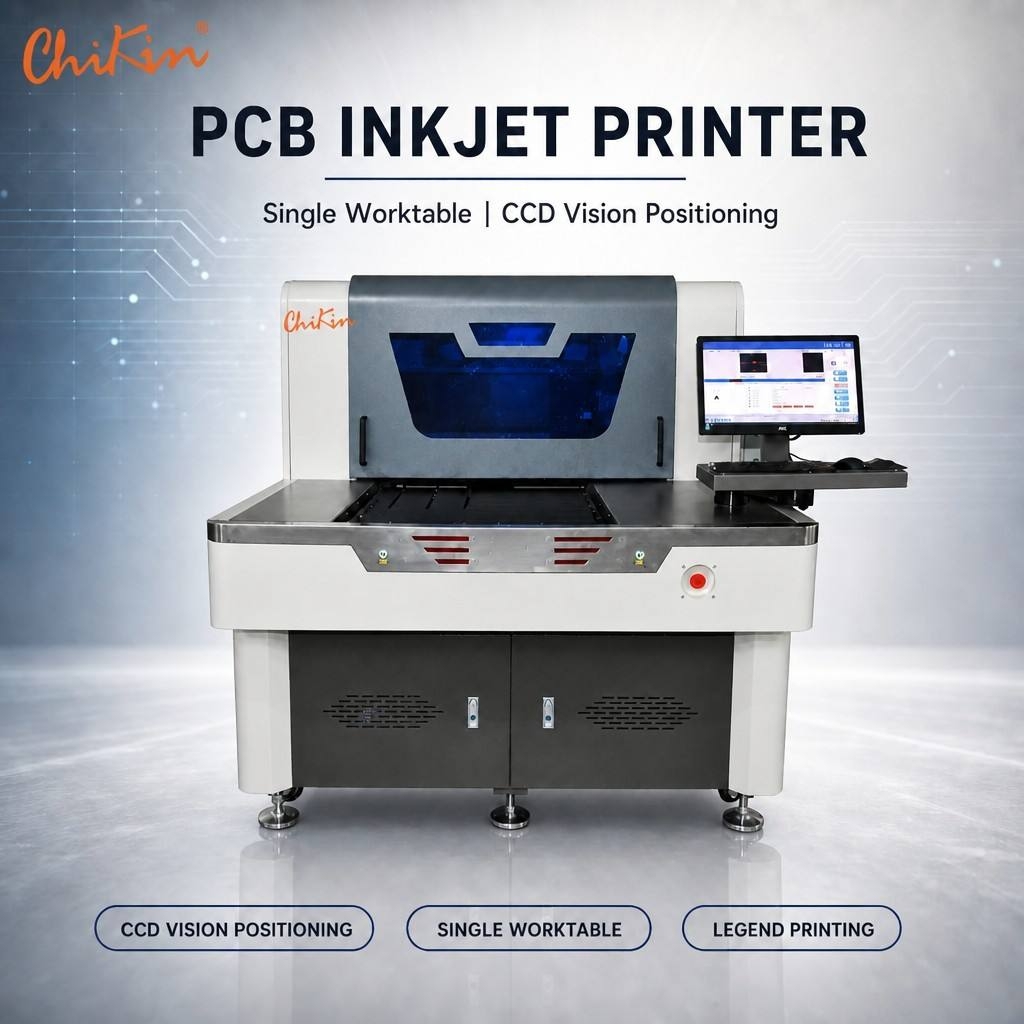
From the visible structure, this is an enclosed gantry-style production machine with a large flat worktable, a tinted viewing window, and a side-mounted operator screen. The cabinet-style body suggests floor-standing industrial use rather than desktop operation. The design focuses on protecting the work area, giving the operator a clear interface, and keeping the machine stable during processing.
Although the exact process technology is not visible, the layout is consistent with CNC sheet-processing equipment used for precision cutting, engraving, or marking tasks. Buyers who usually search for the best inkjet printer for production may still find this category useful when they need a programmable machine that handles rigid or semi-rigid sheet materials with a controlled workflow.
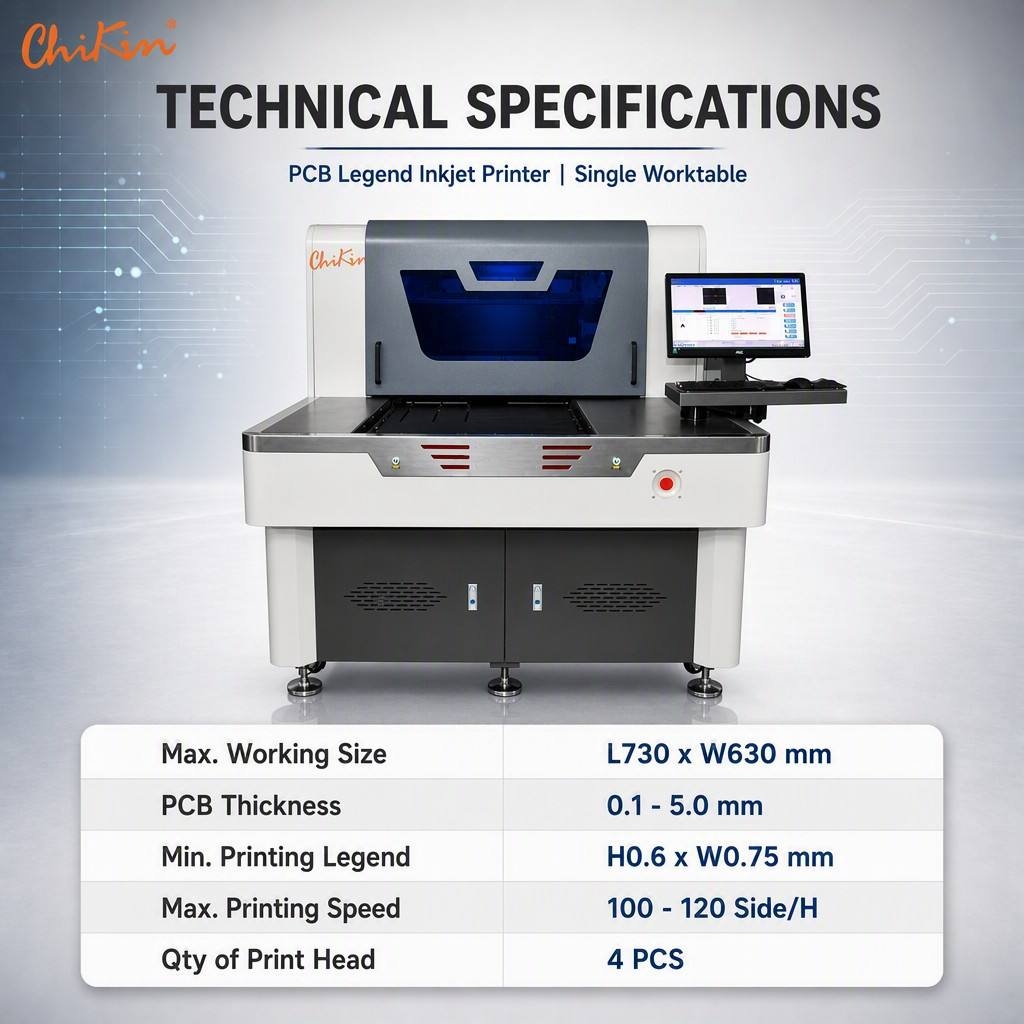
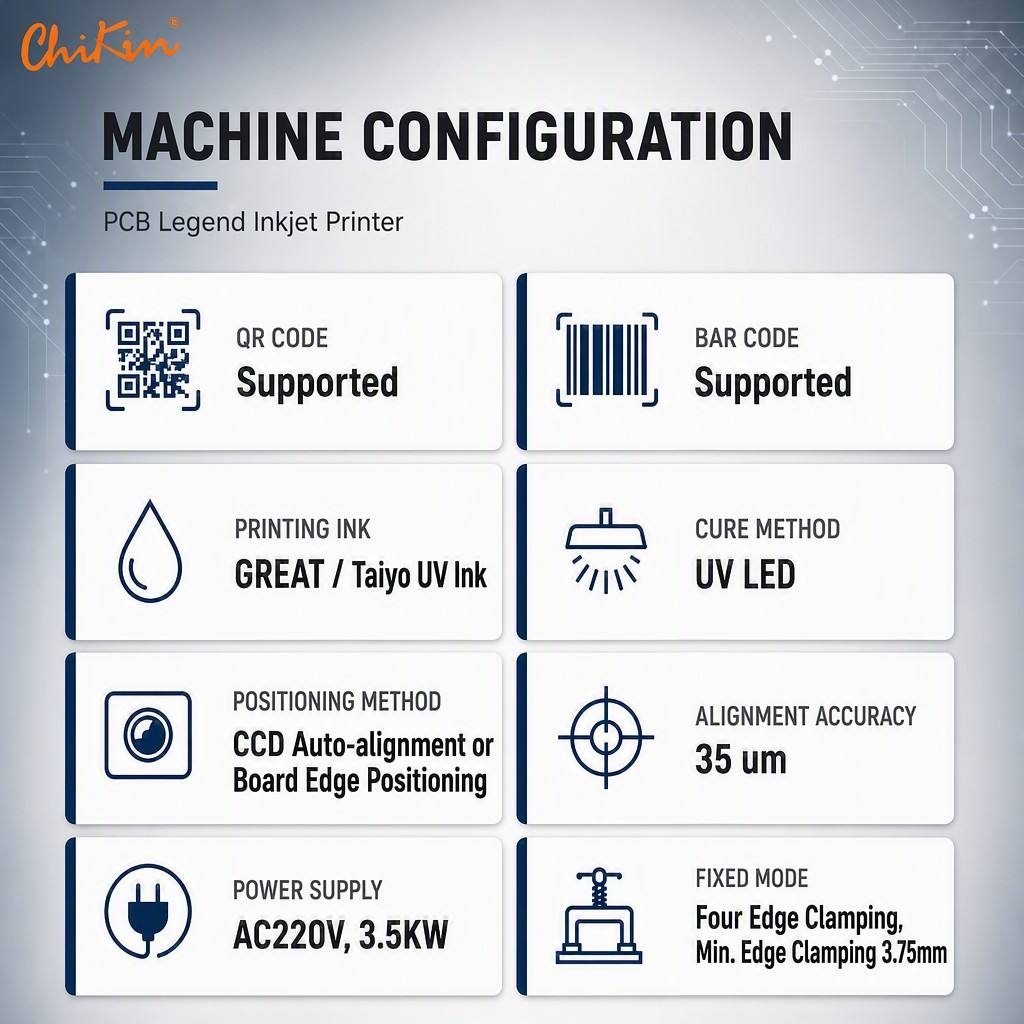
Machine specification
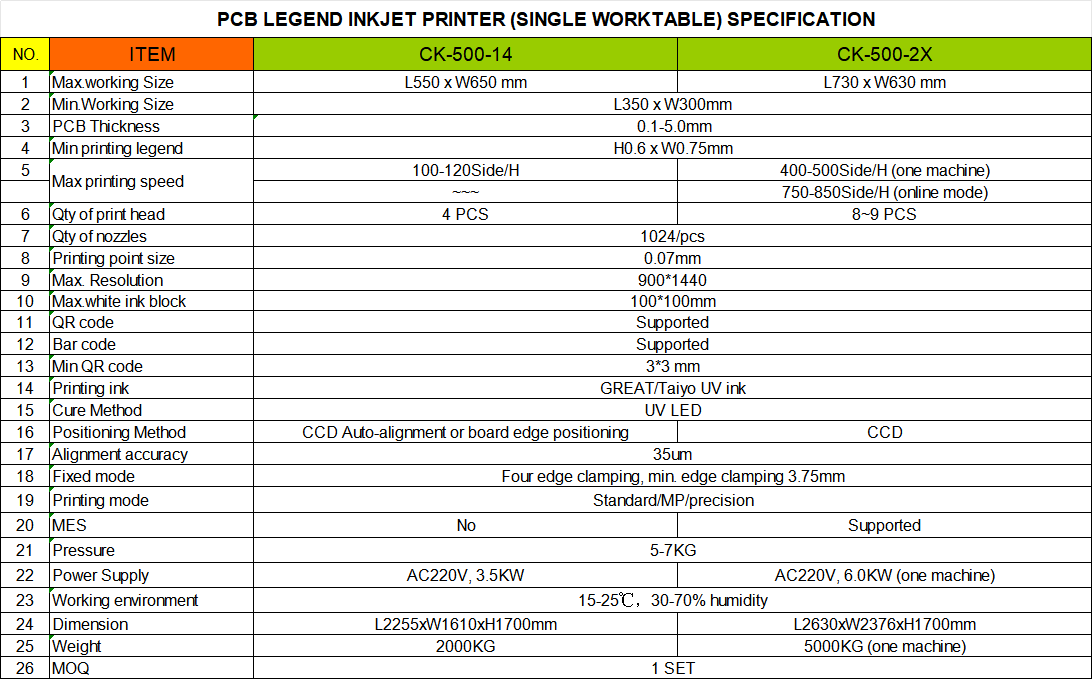
Visible Specifications and Machine Features
Construction
The housing appears to be painted metal in light gray and dark gray with a matte or satin industrial finish. A blue-tinted safety viewing panel covers the front opening, and the lower section includes vented service or storage doors. Adjustable leveling feet are visible at the base, which helps with floor placement and machine stability.
Control and Operator Interface
A touchscreen or monitor mounted on the right side supports direct operator interaction. The front control area includes a prominent emergency stop button and status indicators. This makes the machine easier to monitor during setup and operation, especially in production environments where quick intervention matters.
Working Area
The machine includes a large flat bed or cutting table, suitable for sheet-based processing. The enclosed gantry space indicates that the work area is designed for computer-controlled motion over a planar surface.
Application Scope And Summary
Characteristics and advantages
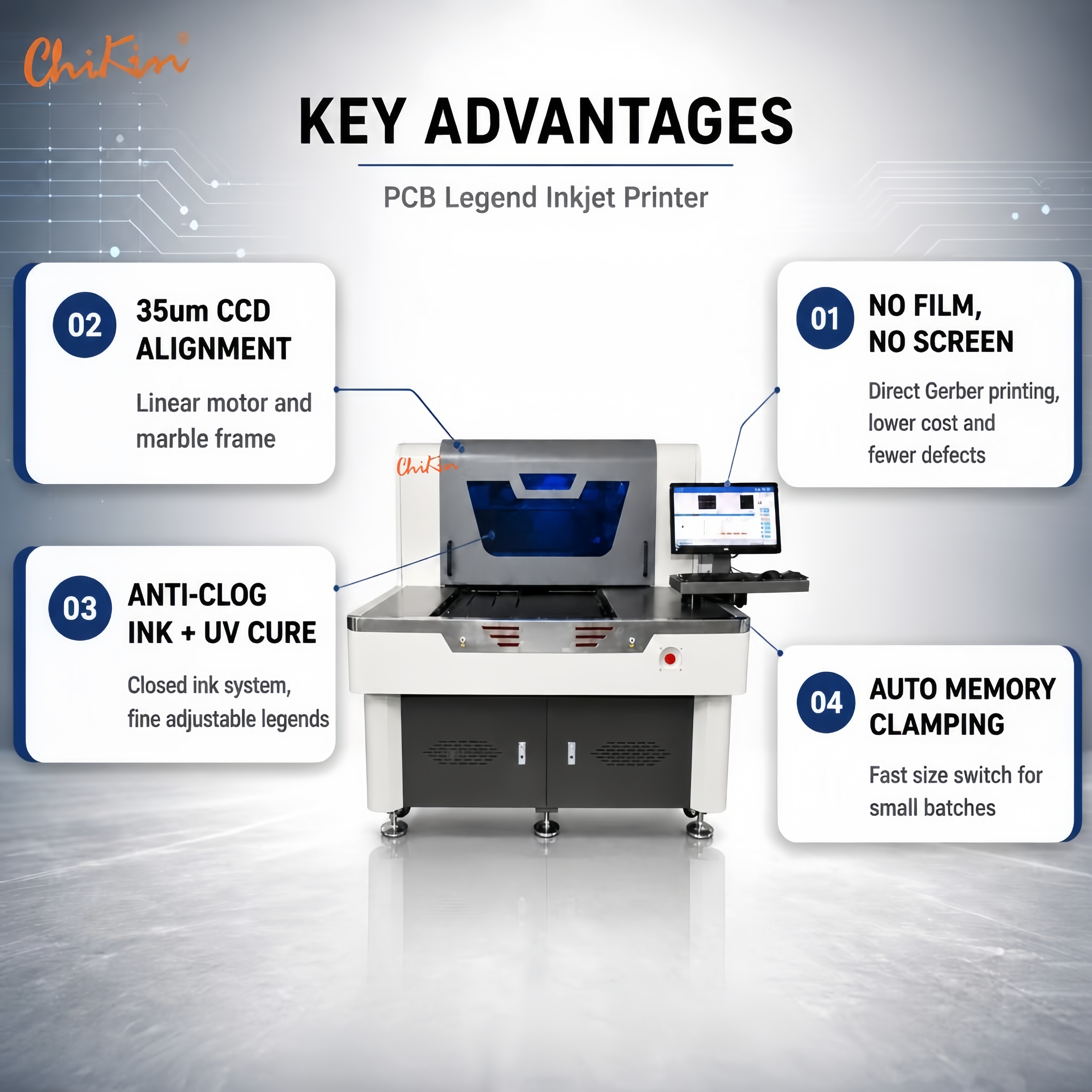
2.This machine adopts CCD automatic alignment to avoid manual alignment errors and improve legend accuracy;
3.Memory clamping, without the need to manually input the size of the board, simply place the board on the workbench, drag the horizontal and vertical fixtures to the board edge, and the machine automatically learns and remembers the position, which is simple, convenient, and efficient;
5.Variable point control inkjet, also known as grayscale printing, or ""multi bit printing,"" refers to the function of fusing multiple ink dots into a large ink dot within a nozzle hole, which can spray different sizes of ink dots. Gray scale printing has a good effect on the transition color from deep to light, optimizing character effects, controlling character line width and thickness, and controlling color block thickness (minimum 20 μm Below);
6.Our company has developed a fully enclosed ink circuit internal circulation system, which automatically circulates within the ink circuit. When in standby, it can also make the internal ink indirectly active, preventing ink deposition and accumulation from causing nozzle blockage;
7.Directly using Gerber data printing eliminates the need for film and screen printing, eliminating the need for manual screen printing and other processes, avoiding quality issues in these processes and improving character quality;
9.The single worktable legend inkjet printer does not have the function of automatic loading and unloading and online fully automatic loading and unloading;
10. As for the double worktable legend inkject printer, customers can choose between single machine manual loading and unloading and on-line dual machine fully automatic loading and unloading;
Materials and Finish Options
Only visible exterior materials can be confirmed from the image: metal cabinet panels, a black working surface, and a blue-tinted safety window. For a machine in this category, buyers typically evaluate frame rigidity, panel finish, service access, and resistance to dust buildup. If you are comparing inkjet printers in a manufacturing setting, the same logic applies: the outer build affects uptime, maintenance access, and long-term stability.
Manufacturing Process and Workflow Use
This type of machine is typically used in a programmed workflow. The operator prepares a digital file, sets the job parameters in the control interface, places the sheet material on the bed, and runs the process inside the enclosed chamber. The enclosed cabinet helps separate the work zone from the operator area, which is valuable for safety and process consistency.
Depending on the actual configuration, the machine may support precision cutting, engraving, or marking on suitable sheet materials. Because hidden technical details are not visible, buyers should confirm the exact process source, supported materials, and performance data before ordering.
Application Scenarios
This industrial platform is relevant for signage fabrication, acrylic or plastic part production, template making, prototype work, and other general sheet-processing tasks. It is also a practical fit for facilities that need clean layout control and repeatable computer-guided operation. For teams comparing a multifunction inkjet printer against a dedicated production machine, the decision often comes down to whether the job needs only printed output or a broader set of fabrication functions.
Quality Control and Safety Considerations
The visible emergency stop button, enclosed working chamber, and monitored front panel point to a machine intended for controlled production use. Buyers should still verify the details that are not visible: motion accuracy, supported file formats, extraction or cooling requirements, and maintenance intervals. Those items matter more than marketing language when selecting a machine for daily production.
Customization and Buyer Decision Factors
When evaluating this type of equipment, focus on the actual workflow. Ask whether you need only surface output, or whether cutting and shaping are also part of the job. Confirm bed size, usable travel area, enclosure access, operator interface language, and service requirements. If your search started with inkjet printers, use the same buyer checklist: output quality, operating speed, consumables, footprint, and ease of use. The right machine is the one that matches your material range and production volume, not just the one with the broadest name category.
Request More Details
If you need a machine like this for production work, send your material type, target format, and daily output requirements. A clear spec sheet makes comparison much easier and helps avoid guessing about fit, performance, or process capability.