



Tool Pods Overview
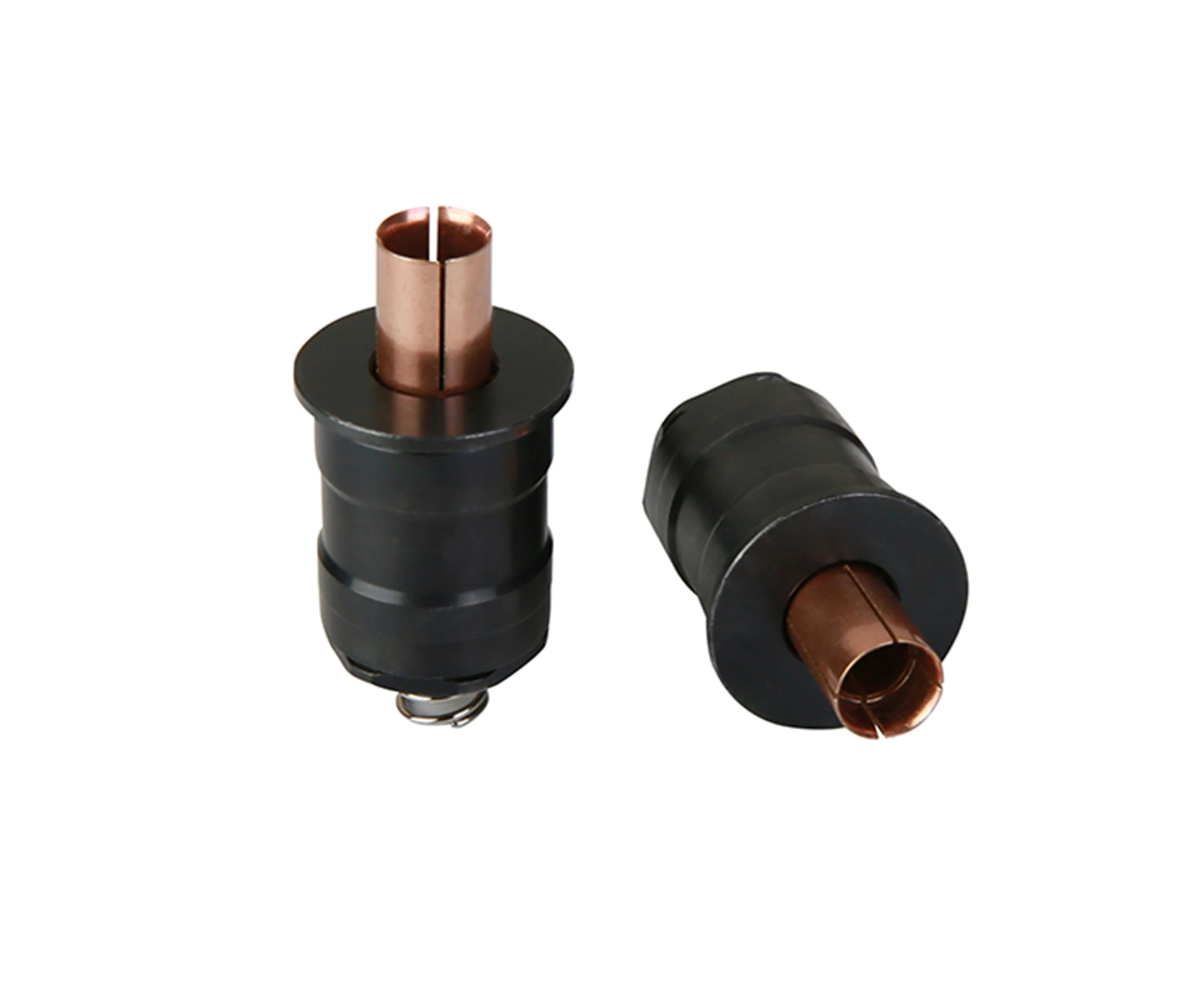
Tool Pods are precision-machined metal components used in machine assemblies where alignment, support, and controlled spacing matter. In practical terms, they help solve a common buyer problem: keeping moving parts centered and stable while reducing wear at contact points. The visible part supplied here appears to be a cylindrical, stepped component with a black exterior and a copper-colored inner bore, which suggests a compact part designed for guided assembly or interface protection. Because the exact function is not identifiable from the image alone, it is best treated as a precision mechanical element rather than a fixed catalog item.
For buyers comparing tool storage pods, tool container options, or other pod tools-related hardware, this type of part sits in a different category: it is a machined component for equipment construction, fixture design, or maintenance replacement. If your application depends on concentric fit, smooth sliding contact, or repeatable positioning, the geometry shown here is the kind of structure often specified in industrial tooling.
Product Reference and Visible Construction
The observed part has a coaxial stepped profile with multiple diameter changes and flat shoulders. One end is open and tubular, indicating a through-bore or internal passage. The outer body appears black-coated or anodized, with a matte-to-satin surface. Inside, a copper-toned section is visible, which may be a separate insert, a lined bore, or a contrasting surface finish. The photo does not reveal threads, fasteners, or markings, so the part likely relies on press fit, sliding fit, or assembly integration rather than external hardware.
Key visible characteristics
Two-tone metal construction with a dark outer shell and copper-colored inner feature.
Stepped cylindrical form suitable for coaxial assembly.
Open hollow bore for passage, guidance, or clearance.
Smooth exterior finish with no obvious surface defects visible in the image.
Likely Functions in Industrial Assemblies
Although the exact application is not confirmed, a machined part with this geometry is commonly used as a guide sleeve, spacer, bushing-style interface, or adapter element. In automation systems and precision fixtures, these components help align shafts, support rotating or sliding interfaces, and maintain spacing between parts. In tool-build environments, they may also serve as wear-resistant contact surfaces where repeated assembly cycles would otherwise damage a base structure.
Typical application scenarios
Machine tooling and fixture alignment.
Shaft guidance and concentric spacing.
Wear interface protection in moving subassemblies.
Industrial equipment and automation assemblies.
Materials, Coatings, and Finish Options
Based on appearance, the outer surface may be coated, black-oxide treated, or anodized depending on the base metal. The inner copper-colored feature may indicate a bronze-colored insert, a plated surface, or a separate sleeve. Since the image alone cannot confirm the exact material stack, buyers should verify substrate, coating, and wear surface requirements before production.
For custom builds, common choices for parts like this may include carbon steel, stainless steel, aluminum, bronze, or engineering alloys, depending on load, friction, corrosion exposure, and machining needs. Finish selection usually depends on the operating environment: dark protective coatings can improve appearance and surface protection, while bearing or sleeve interfaces may require a low-friction or wear-focused internal finish.
Manufacturing Process and Machining Considerations
This type of part is typically produced through CNC turning or lathe machining, with secondary operations added as needed for surface treatment, bore finishing, or insert installation. The stepped geometry suggests a process where outer diameters, shoulders, and internal bore features must remain coaxial. That makes dimensional control important even when the part looks simple from the outside.
Buyers should ask whether the part is made from a single blank or from a two-material construction. If the copper-colored area is a separate insert, the assembly method becomes part of the technical specification. If it is only a surface finish, then wear behavior and lubrication requirements should be reviewed carefully.
Quality Control Focus
For Tool Pods used in precision assemblies, quality checks usually center on concentricity, bore condition, shoulder flatness, outer diameter consistency, and surface integrity. Visual inspection alone is not enough for critical applications. Measurement with calipers, bore gauges, or CMM inspection may be appropriate depending on the tolerance demands of the system.
Before ordering, confirm the dimensions that matter most to your assembly: inner diameter, outer diameter, overall length, step heights, and any fit class required by the mating parts. If the component will run under repeated motion, ask about surface roughness and wear behavior as well.
Customization Guidance for Buyers
When specifying custom tool pods or related machine components, start with the mating interface. Provide a drawing if available, or at minimum list the critical diameters, length, shoulder locations, and functional load conditions. If corrosion resistance matters, identify the environment. If friction is the concern, define whether the part needs a bearing-like surface, a protective coating, or a replaceable insert.
For buyers searching for tool storage pods, tool container formats, or pod tools in an industrial context, clarify whether you need a storage product or a machined component like this one. That distinction avoids sourcing errors and speeds up quotation review.
Buyer Decision Factors
Focus on fit, material compatibility, and repeatability rather than appearance alone. A part like this may look straightforward, but small differences in bore finish, shoulder geometry, or coating thickness can change how it performs in a machine assembly. If your application is critical, request dimensional confirmation and sample approval before full production.
Request a Custom Quote
If you need Tool Pods for a machine build, replacement assembly, or custom fixture project, share your drawing, sample, or target dimensions with the supplier. Clear technical input helps match the correct material, finish, and machining method to your application. Contact the manufacturer to discuss your requirements and confirm suitability before production.