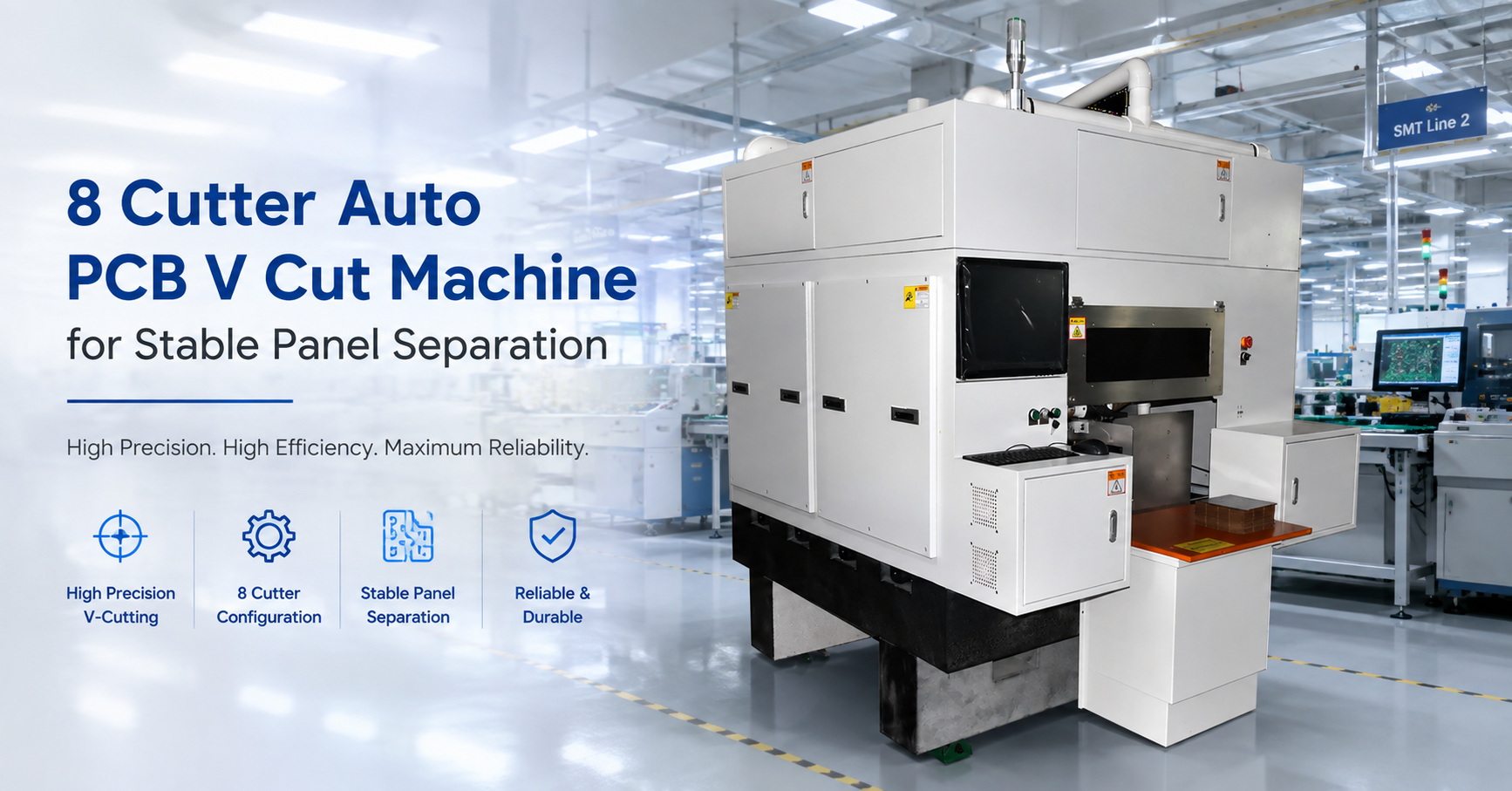
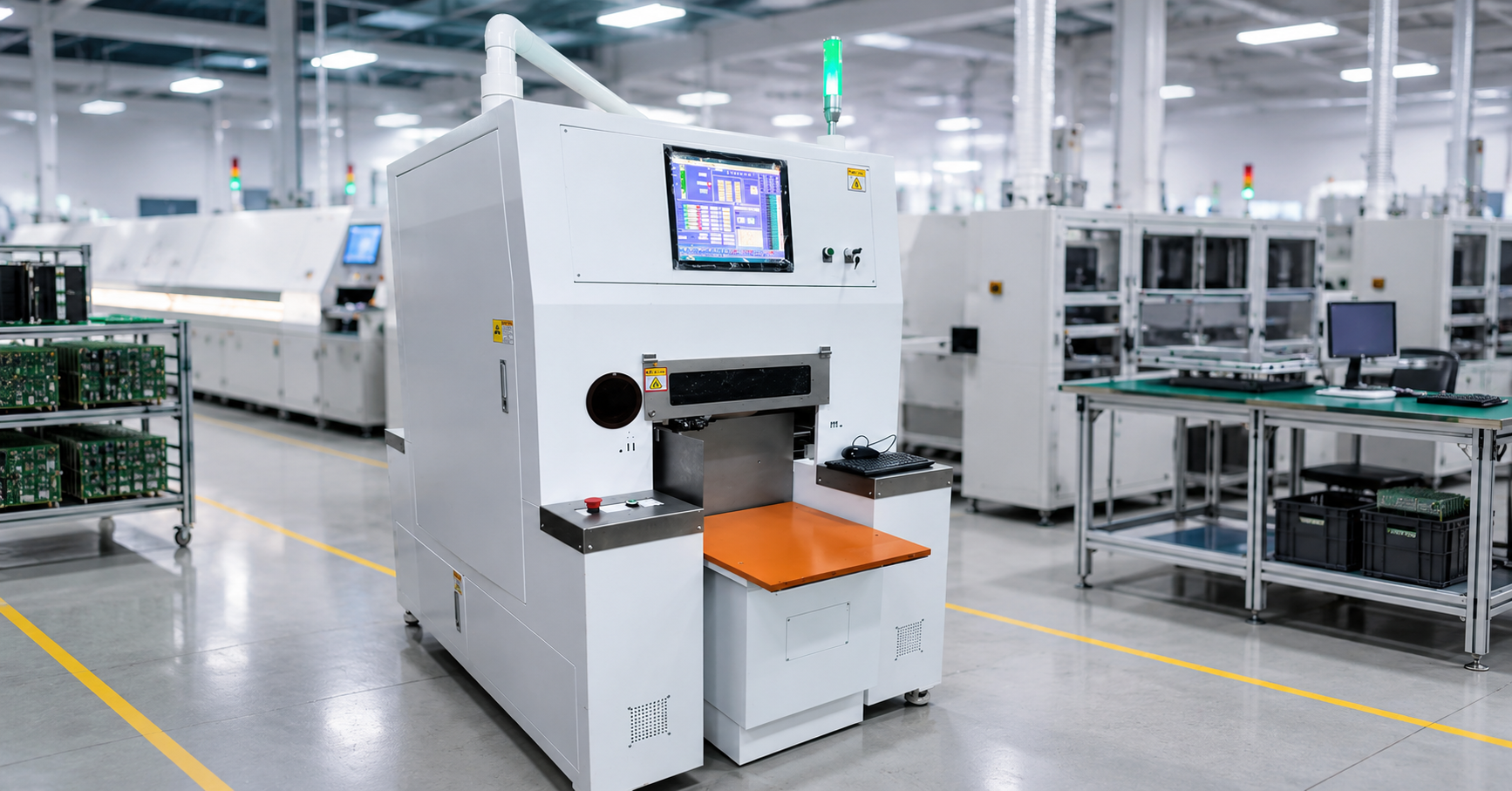
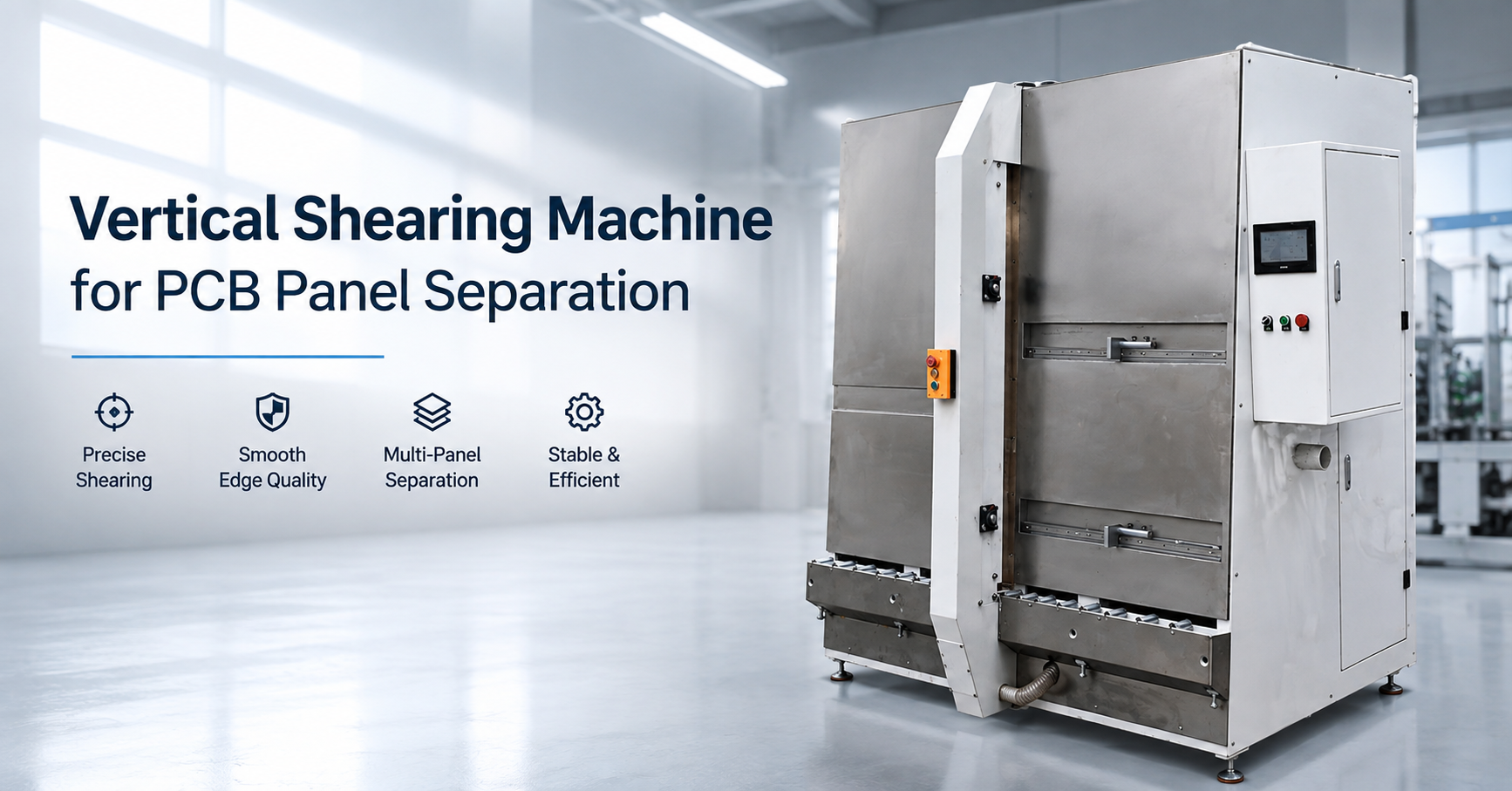
8 カッター自動 PCB V カット機は、V スコアまたは V 溝 PCB パネル加工用に設計された生産機械です。マルチカッター レイアウトは、特に反復的なパネル作業において、より単純な単一ツールのアプローチと比較して、スループットとプロセスの継続性を向上させることを目的としています。
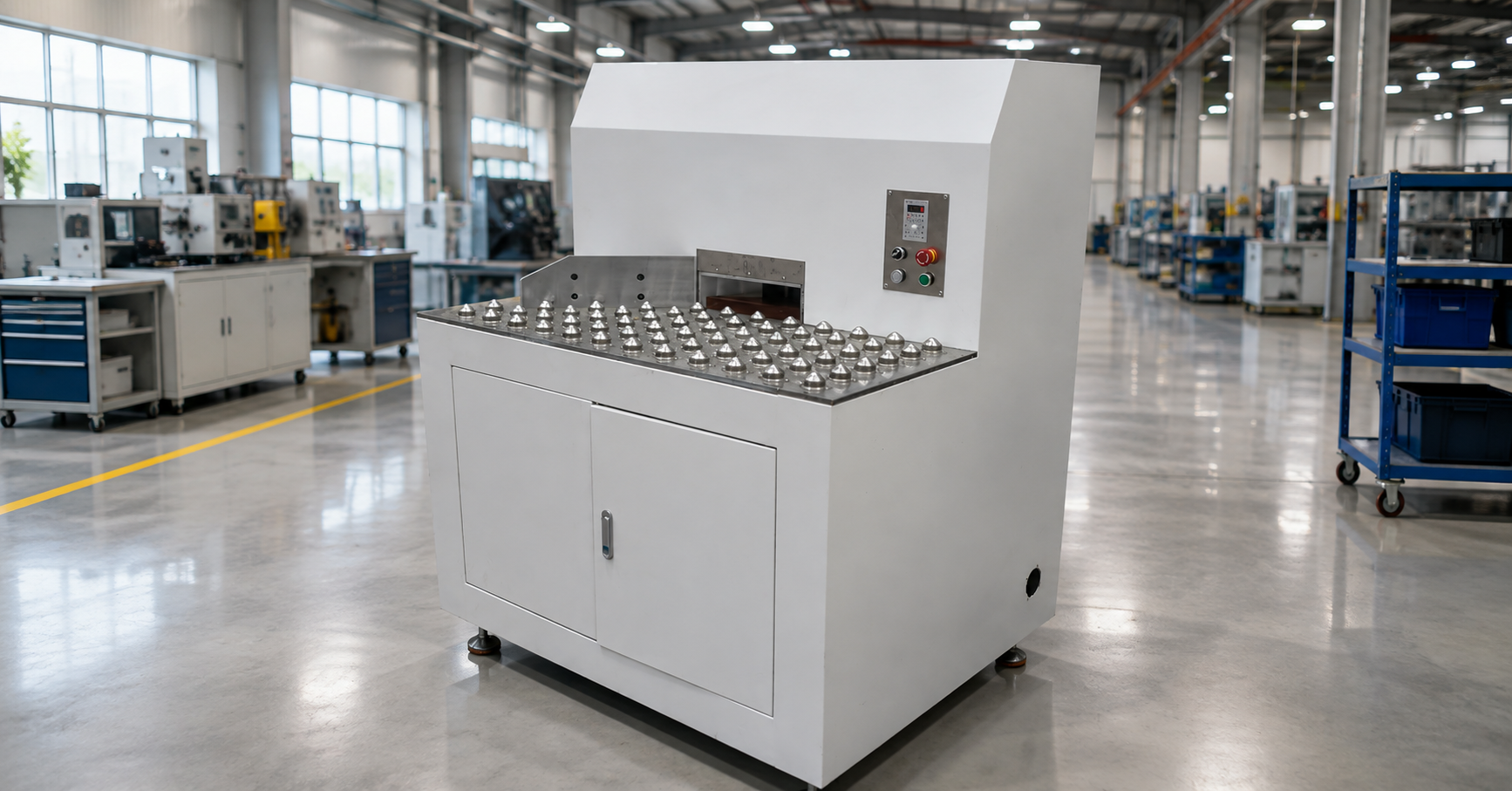
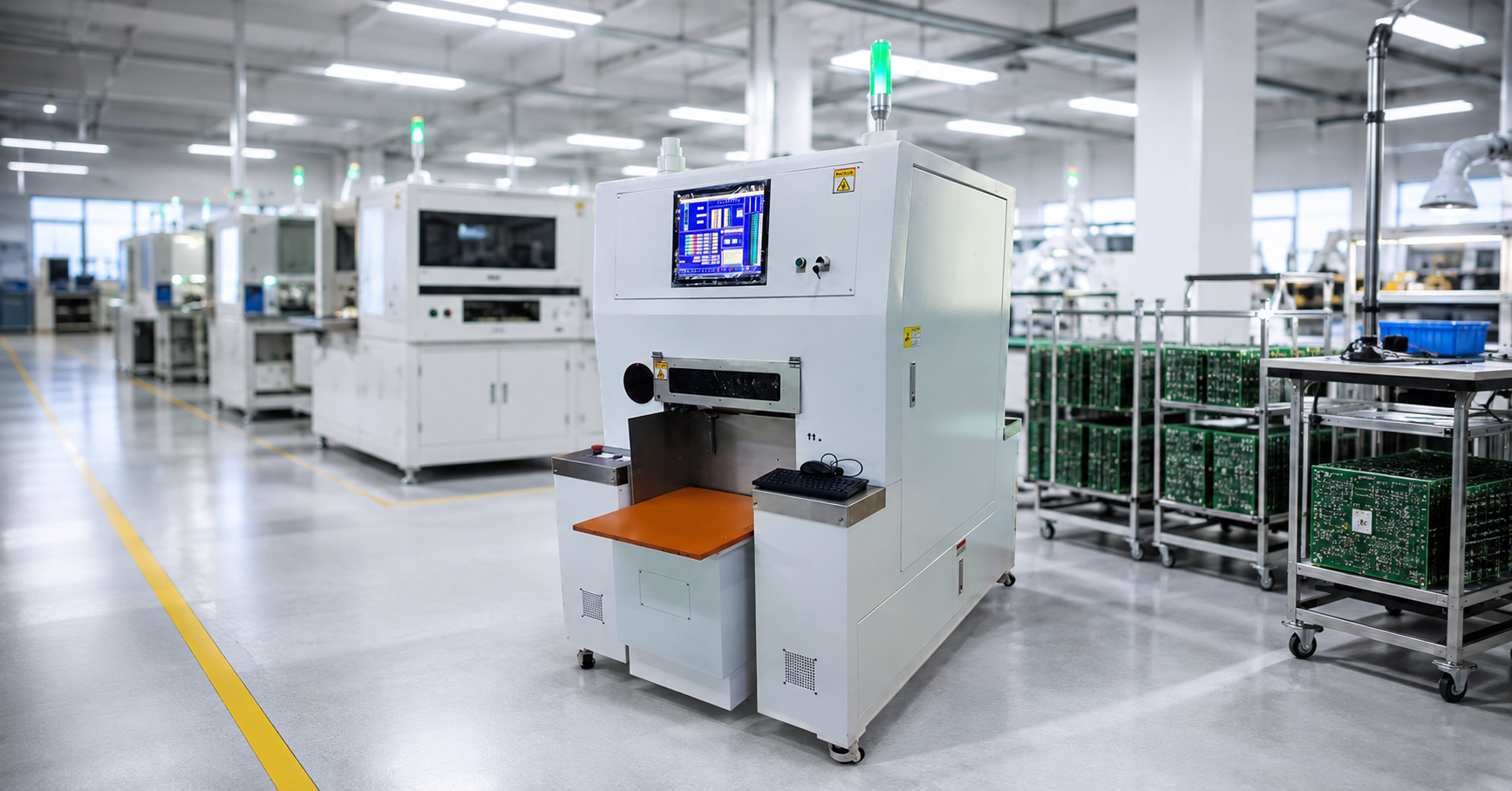
Chikin CNC 製品ページでは、8 カッター レイアウトを、密閉された機械構造内で組織的な操作を維持しながら、より高速なスループットとより効率的な基板処理を実現する実用的なソリューションとして位置づけています。このマシンは、フロント作業ゾーン、表示窓、制御エリア、換気または排気用のユーティリティ ルーティングを備えた、制御された V スコア操作のための産業用 PCB パネル分離ソリューションであると説明されています。
カッターの構成が生産リズムに影響を与えるため、「8 カッター」というフレーズが重要になります。単一のカッターは、単純な、または少量の V 溝の分離に役立つ場合があります。工場が適切なパネル形式でより高い効率を必要とする場合、複数のカッターの設計がより適切になります。機械が基板のフォーマット、溝の仕様、パネルの剛性、生産レイアウトに正しく適合している場合、より多くのカッターでより多くの連続処理をサポートできます。
これは思っている以上に重要です。パネル剥離では、基板がどのように機械に入るかが位置合わせに影響します。オペレータが毎回異なる方法でパネルにロードすると、カッター パスが一貫しない可能性があります。作業面がボードを適切にサポートしていないと、パネルが曲がる可能性があります。 V 溝がカッター パスと一致していない場合、エッジの損傷や分離の不均一が発生する可能性があります。
リジッド PCB V スコアリング マシンは、基板設計だけでなく工場の生産環境にも適合する必要があります。ユーティリティの配線と抽出計画を立てることで、設置後の悩みを軽減できます。
V 溝分離の品質管理
V カットのパネル取り外しの品質管理は、通常、位置合わせ、カッターの状態、送り動作、基板のサポート、キャビネットの完全性、オペレーター インターフェイスの明瞭さに依存します。 Chikin の製品ページでも同様の点が指摘されています。購入者は見出しの主張だけではなく、カッター構成、基板フォーマットの互換性、セットアップの容易さ、エンクロージャの安全性、メンテナンスへのアクセス、ラインの適合性に焦点を当てる必要があります。また、エッジの品質が重視される場合、スコアリングパスの安定性が重要な購入基準になることも指摘しています。
マシンは、基板設計がパネル取り外し方法をサポートしている場合にのみ良好に動作します。 PCB V カット マシンは、V スコア付きパネルを対象としています。 PCB パネルの設計が V カット分離に適していない場合は、ルーティング、パンチング、レーザーによるパネル取り外しなどの別の方法がより適切な場合があります。
パネル図面。 パネル寸法。 V 溝レイアウト。 予想される基板ファミリー。 Current depaneling process. Production volume. Line layout drawing if available. Required extraction direction. Operator loading preference. Maintenance clearance limits.
This information helps the supplier recommend a configuration that fits the factory instead of only matching a catalog name.
Why Operator Fatigue Should Be Treated as a Production Issue
Operator fatigue is often underestimated in depaneling. Manual separation or poorly guided processes can become tiring when the same motion is repeated hundreds of times per shift. Fatigue increases variation. Variation increases defects.
Chikin’s product page directly identifies operator fatigue as one of the problems the 8 cutter auto PCB V cut machine is designed to address, together with edge damage, inconsistent scoring depth, dust, and output stability.
A machine with front loading, fixed tooling, repeatable motion, and an organized work zone can help reduce dependence on manual force. Operators still need training, and they still need to inspect boards, but the process becomes less dependent on hand pressure and personal habit.
For production managers, reducing fatigue is not only about comfort. It is about yield, consistency, training time, and shift-to-shift performance.
What to Ask a PCB Depaneling Equipment Supplier
Before buying a PCB depaneling equipment supplier’s machine, buyers should ask detailed questions:
Can the machine process our panel size and board thickness? What V-groove specifications are recommended? How is cutter spacing adjusted? How long does changeover take between board families? Can all cutters be used independently or only together? What cutter material and service life should we expect? How is cutter wear inspected? What extraction or dust collection system is included? What utility connections are required? What safety guarding and emergency controls are standard? Can you run a sample test using our actual panels? What spare parts should be kept in stock? Can the worktable size or control position be customized? What training and after-sales support are provided?
The answers will reveal whether the supplier understands PCB depaneling as a production process, not just a machine sale.
Common Buying Mistakes
One common mistake is choosing only by cutter quantity. More cutters are useful only when they match the panel layout and output need.
Another mistake is ignoring V-groove quality. If scoring depth is inconsistent before the board reaches the separator, the machine cannot fully correct the upstream issue.
A third mistake is failing to plan extraction. Dust and debris can affect cleanliness, maintenance, and operator comfort.
Some buyers also overlook changeover. If many board families are processed in small batches, adjustment speed may matter more than maximum cutter count.
Another mistake is accepting vague promises about stability without testing real panels. Sample testing remains one of the most reliable ways to confirm machine fit.
Finally, buyers may focus on price and ignore service. A machine that cannot be maintained, adjusted, or supported quickly can become expensive after delivery.
FAQ
What is an 8 cutter auto PCB V cut machine used for?
An 8 cutter auto PCB V cut machine is used for stable separation or V-score processing of rigid PCB panels. It is designed for manufacturers that need cleaner, more controlled board separation, better throughput, and a more organized enclosed workflow.
Why choose an 8 cutter layout instead of a single cutter machine?
An 8 cutter layout is more suitable when the factory processes repetitive panel jobs and needs faster throughput. Multiple cutters can improve process continuity when the machine is properly configured for the board structure and groove specification.
Is this machine suitable for all PCB panels?
No. It is most relevant for rigid boards and V-score or V-groove panel formats. Buyers should confirm panel size, board thickness, groove layout, cutter configuration, and changeover needs before ordering.
Why is the enclosed structure useful?
The enclosed structure provides a guarded working bay, supports process observation through viewing windows, and helps isolate dust, chips, or fumes from the surrounding production area.
What should buyers confirm before purchasing?
Buyers should confirm cutter layout, board format compatibility, V-groove specification, worktable size, extraction routing, access door placement, control panel arrangement, safety design, maintenance access, and after-sales support.
Can the machine be customized?
The product page recommends discussing customization early, including worktable size, cutter layout, extraction routing, access door placement, and control panel arrangement.
What type of factory is this machine best suited for?
It is best suited for electronics factories processing rigid PCBs, assembly houses needing internal panel separation, OEM lines with repetitive board formats, and production sites that prefer enclosed stations with extraction and safety access.
Conclusion
An 8 cutter auto PCB V cut machine is a practical choice for PCB factories that need stable, repeatable, and organized panel separation. Its value is not only in cutting. It helps factories reduce manual variation, improve throughput on suitable panel families, manage dust or debris more effectively, reduce operator fatigue, and create a cleaner depaneling station.
Chikin CNC’s product page positions this machine for manufacturers that need controlled board separation without extra stress on finished panels. It highlights the 8 cutter layout, enclosed machine structure, repeatable motion, fixed tooling, front loading area, inspection windows, utility routing, and relevance for rigid PCB production lines with predictable depaneling needs.
For B2B buyers comparing a PCB scoring machine, multiple cutter PCB separator, multi blade PCB cutter, or automatic PCB depaneling machine, the best decision should start with real production data: board format, V-groove design, panel volume, edge quality target, operator workflow, extraction requirement, and changeover frequency.
A well-matched machine can help the factory move from manual or unstable panel handling to a more reliable production rhythm. For manufacturers that process repetitive rigid PCB panels, that improvement can protect yield, reduce rework, and make depaneling easier to manage across shifts.