



Choosing a Precision CNC Machining Supplier for PCB Production Equipment Parts
When buyers search for a precision CNC machining supplier, they are often trying to solve a very specific problem: how to keep a production line running when the parts are small, the fit matters, and the machine cannot afford sloppy geometry. That is especially true in electronics manufacturing, where PCB production equipment depends on rigid frames, accurate mounts, clean surface finishes, and repeatable interfaces for heads, fixtures, sensors, covers, and guides. If those parts drift even a little, the machine may still run, but not as well as it should.
This matters because PCB equipment is not forgiving. A multi-head board-processing unit, coating station, or inspection machine may look like a simple enclosed cabinet from the outside, yet inside it depends on a lot of aligned mechanical details. Buyers looking for a CNC machining supplier are usually not buying “metal parts” in the abstract. They are buying consistency, assembly fit, and fewer surprises on the production floor.
What the machine image suggests about the machining challenge
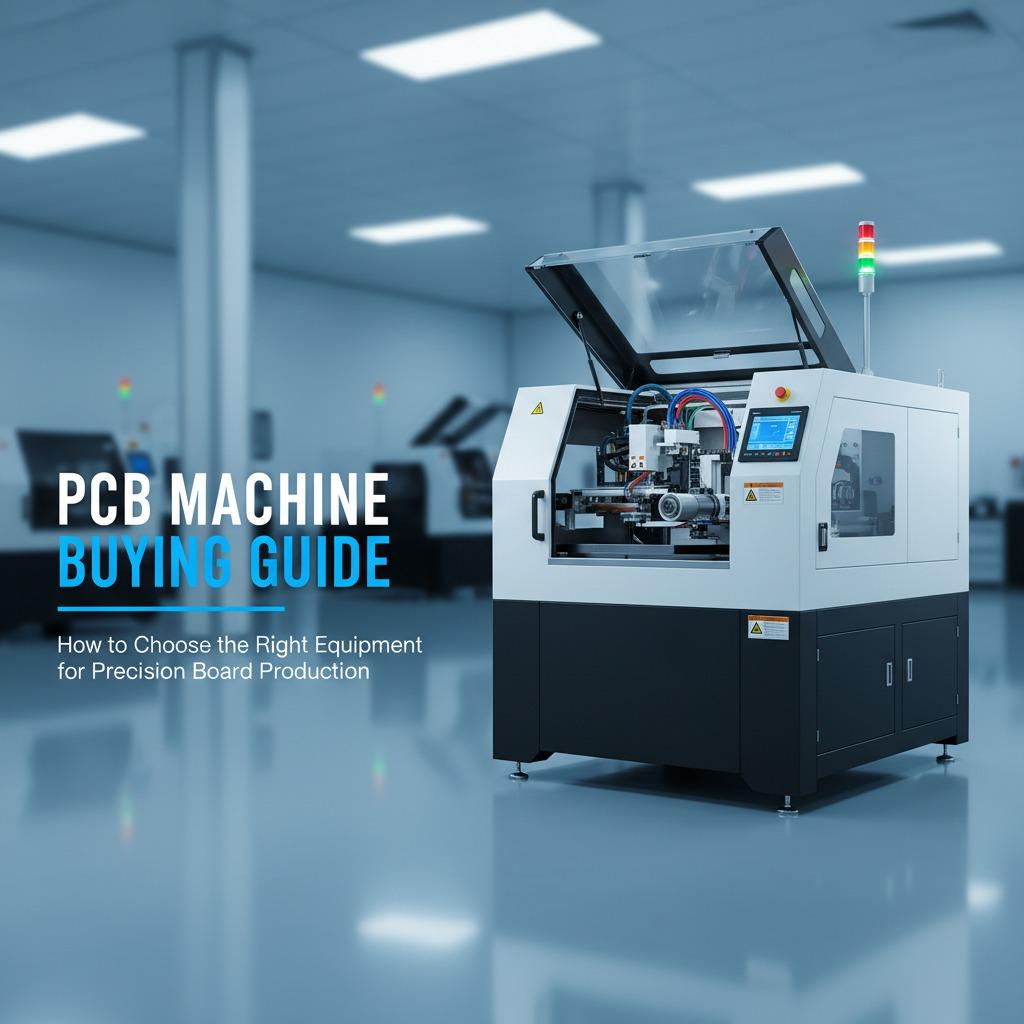
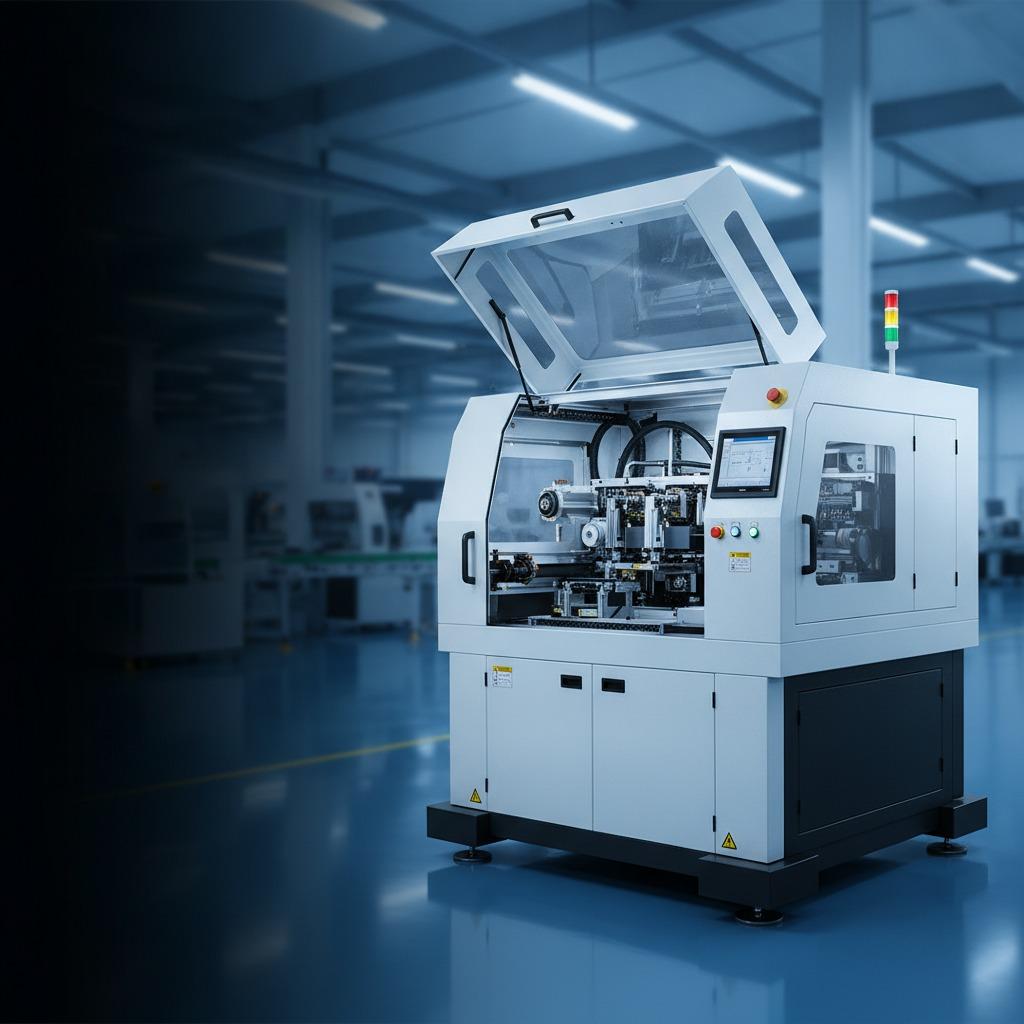
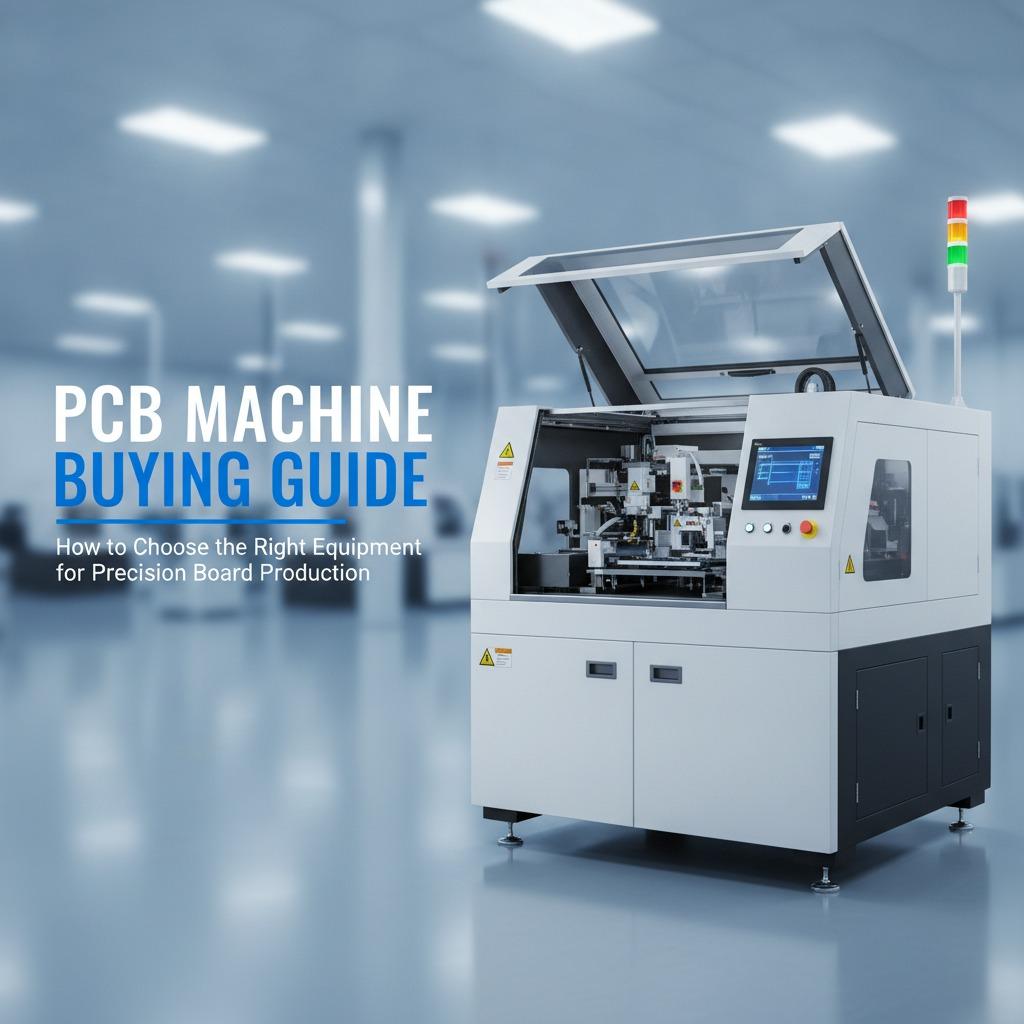
The equipment in question appears to be a floor-standing industrial PCB machine with a sheet-metal enclosure, a raised access cover, internal tooling, and a front control interface. That combination points to a system that likely houses multiple mechanical modules, cable runs, tubing, and service access points. For a machine like this, the outsourced machined components may include mounting plates, brackets, precision frames, guides, blocks, and subassemblies that have to align with electronics, pneumatics, and moving heads.
In practice, that means the machining supplier is not just cutting a shape. The supplier is supporting a production system where flatness, hole position, edge quality, and repeatability all influence how easily the equipment can be assembled and serviced. A part that looks acceptable on a drawing may still create problems if the machining process does not match the real assembly stack-up.
What to look for in a CNC machining partner
A capable CNC machining supplier should understand that precision is not one single thing. For PCB production equipment, the useful question is whether the supplier can hold the critical features that matter to the machine builder. That usually includes accurate hole patterns for mounting, reliable surface finish on mating faces, and stable dimensions across repeat orders.
Buyers should also pay attention to whether the supplier can support both prototyping and repeat production. Many equipment programs start with a pilot build, then move into a short production run once the machine design stabilizes. If the CNC partner cannot transition between those stages cleanly, procurement becomes more painful than it needs to be.
Practical selection criteria
For this kind of work, the strongest suppliers tend to be the ones who ask questions before quoting. They want to know how the part is used, which faces are functional, what needs post-machining, and where assembly stress might land. That may sound basic, but it separates a true CNC machining supplier from a shop that only wants to fill spindle time.
Also worth checking: fixture strategy, inspection discipline, material availability, and whether the supplier can communicate clearly when a drawing is ambiguous. In electronics machinery, drawings are not always perfect. A practical supplier will flag risky tolerances or unclear datum choices rather than quietly making assumptions.
Common part types in PCB equipment builds
While the exact machine operation in the image is not identifiable, PCB production equipment usually relies on a familiar set of machined components. These can include aluminum or steel brackets, precision blocks, motor mounts, sensor supports, linear guide bases, cover supports, and internal frame members. Some parts are structural; others are more about alignment and serviceability.
Precision CNC machining is especially useful where the part must interface with sheet metal housings, machined subframes, and off-the-shelf automation components. A good supplier will understand that these parts need to work in a system, not just as isolated components on a drawing.
Where buyers get into trouble
The most common mistake is treating every quoted supplier as interchangeable. For simple brackets, that may be harmless. For precision board-production equipment, it can become expensive. A low price can hide weak process control, poor communication, or an inability to handle repeatability across batches. Another frequent issue is over-specifying every dimension instead of identifying the few truly critical features. That raises cost and can slow production without improving the machine.
There is also a caution worth stating plainly: if the machine includes coated surfaces, multi-module tooling, or enclosed service areas, the machined parts may need to fit around non-machined components that are less forgiving than the drawing suggests. A supplier with real assembly awareness is often worth more than one with a shiny quote and not much else.
Buyer advice for sourcing CNC parts for PCB machinery
Start by separating cosmetic requirements from functional ones. A clean finish on the enclosure matters, but the real performance risk usually sits in the internal mounts, locating features, and interfaces between modules. Then ask your supplier how they will inspect critical features and how they handle revisions. PCB equipment evolves, and parts often change after the first build.
If you are comparing a precision CNC machining vendor against a broader fabricator, focus on assembly fit and repeatability, not just machine list or material claims. The best partner is usually the one that can produce parts that disappear into the machine during assembly because they simply fit the first time.
FAQ
Is CNC machining suitable for PCB production equipment parts?
Yes. It is widely used for frames, brackets, mounts, blocks, and other parts that need accuracy and repeatable fit in automated electronics machinery.
Do I need a specialized supplier?
Not always a niche one, but you do need a supplier that understands precision assembly, controlled finishes, and the demands of industrial automation.
What should I send for a quote?
Send clear drawings, material requirements, key functional dimensions, and any assembly notes. If the part mates with a PCB machine module, mention that too. Context helps a supplier quote the job properly.
Next step
If you are sourcing machined parts for PCB production equipment or similar automation systems, choose a supplier that can talk through fit, inspection, and repeatability before the first part is cut. That is usually where a promising quote becomes a dependable supply relationship.