



Choosing a precision CNC machining supplier for PCB equipment and factory automation
When buyers search for a precision CNC machining supplier, they are often not just looking for a machine builder. They are looking for a partner who can hold dimensions, protect process stability, and deliver equipment that fits into a real production line. That matters especially in electronics manufacturing, where board production and assembly systems must work cleanly, repeatably, and without constant operator intervention. A small mechanical mismatch can turn into downtime, scrap, or inconsistent board quality, which is exactly why procurement teams tend to get cautious here.
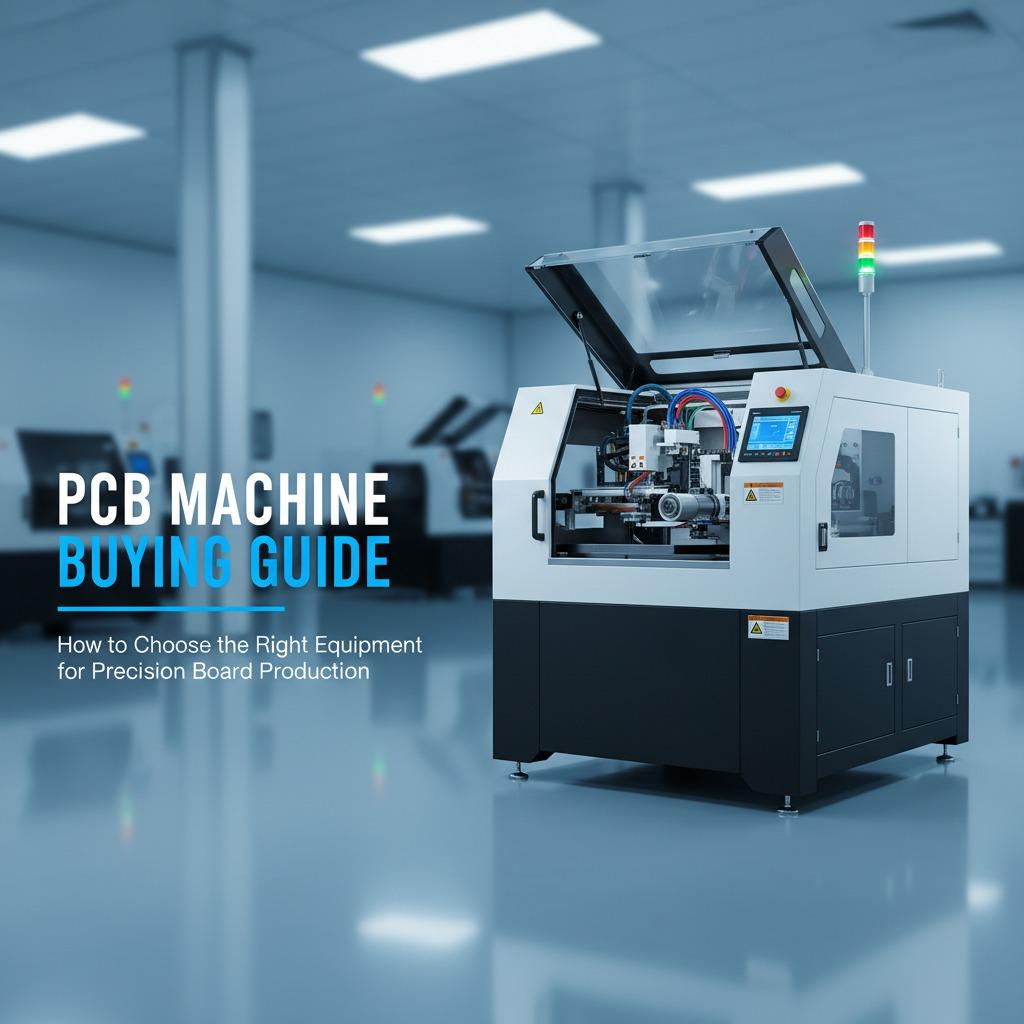
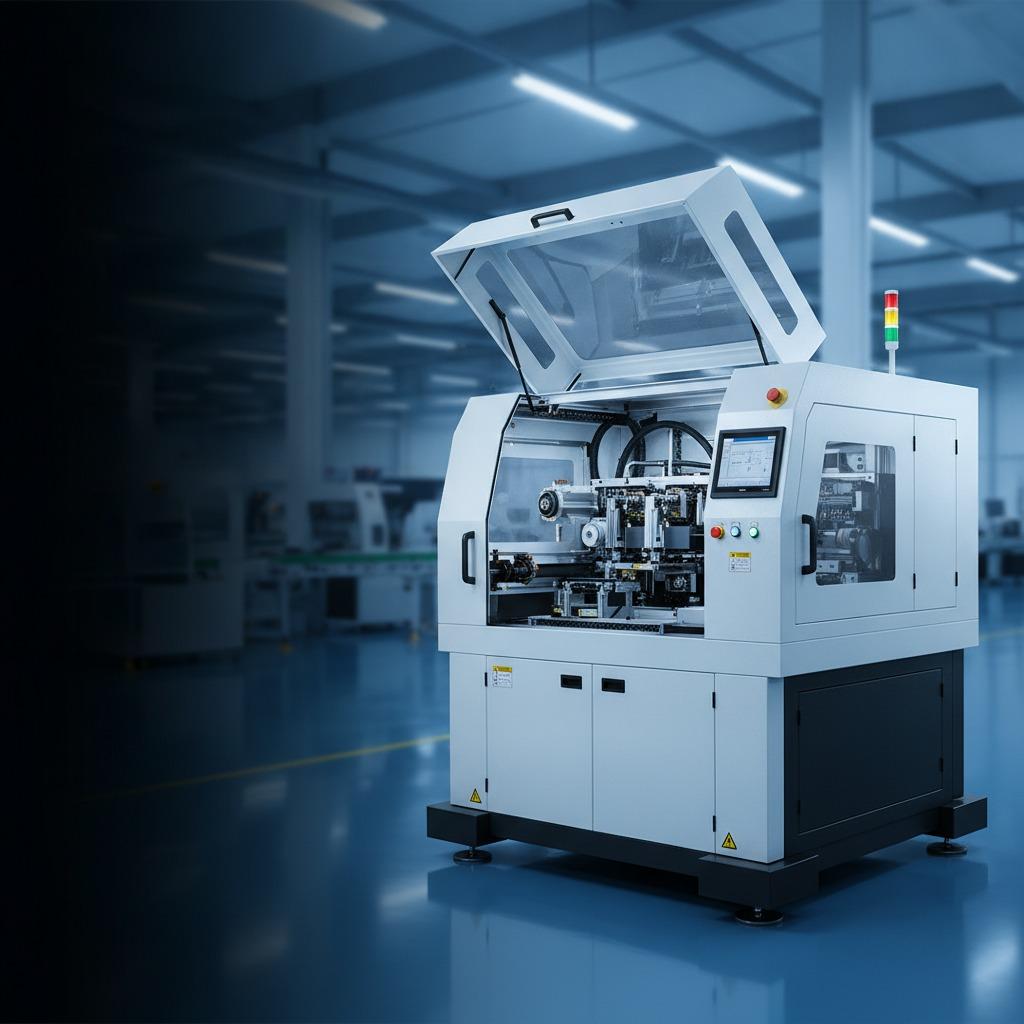
The image supplied suggests an industrial PCB processing machine in a factory setting: enclosed, floor-standing, with a side-mounted HMI, tower light, warning labels, and an access opening showing internal mechanisms. The exact model is not identified, so the useful question is not “what machine is this?” but “what should a buyer look for when selecting equipment and the supplier behind it?”
Why precision matters in PCB equipment
PCB manufacturing and PCB assembly equipment operate in a narrow comfort zone. Boards are delicate, process steps are often sequential, and the machine needs to maintain positional consistency without damaging material. In practical terms, buyers are balancing several risks at once: misalignment, contamination, operator error, and poor serviceability.
That is why precision CNC machining becomes relevant even for equipment that is not a classic cutting or milling machine. The frame, enclosure, guides, mounting interfaces, and internal assemblies all depend on accurate machining and careful assembly. If those base elements are off, the machine may still run, but not necessarily well over time.
What the visible machine design suggests
The machine shown has a large enclosed sheet-metal body, a black base, a sloped upper cover, and a service opening that exposes internal modules. That kind of design usually points to a production-minded system built around safety, cleanliness, and controlled access. The tower light indicates active status signaling, while the HMI suggests operators are expected to monitor or adjust settings directly at the machine.
For buyers, those are not cosmetic details. Enclosure design affects maintenance access, safety compliance, and how easily technicians can intervene without disturbing surrounding equipment. In a busy electronics line, that matters more than people sometimes admit during the first round of sourcing.
How to evaluate a CNC machining supplier for this kind of equipment
1. Look at the supplier’s ability to machine structural parts accurately
Even if the final machine is an automated PCB processing system rather than a machining center, the quality of the fabricated structure still depends on precision CNC machining. Ask how the supplier handles base frames, mounting faces, alignment features, and enclosure interfaces. These are the areas that affect repeatability most.
2. Check integration capability, not just parts capability
A capable CNC machining supplier should understand how machined components fit with electrical controls, sensors, guards, and service panels. For equipment like the one shown, the issue is rarely one part in isolation. It is whether all the parts assemble into a machine that can be serviced without a fight.
3. Ask about process discipline
Buyers should ask how the supplier verifies fit-up, handles assembly checks, and manages revisions. It is not enough to hear that a shop has modern machines. You want evidence that the supplier works in a controlled way, because PCB equipment tends to punish loose tolerances and inconsistent assembly habits.
Common mistakes buyers make
One common mistake is treating all precision CNC machining the same. A supplier that can make a neat bracket may still struggle with a larger enclosed machine that needs stable geometry across multiple subassemblies.
Another is focusing only on the machine’s front-end features — the screen, the enclosure, the visible automation — while ignoring maintainability. If internal modules are hard to reach or replacement parts require major teardown, the line will pay for it later.
A third mistake is assuming the same supplier can support every PCB process equally well. Board production, inspection, placement, and related automation all have different mechanical demands. Buyers should press for application relevance rather than generic claims.
Practical buyer questions to ask before you commit
Ask how the supplier manages dimensional control across welded, machined, and assembled components. Ask whether the enclosure design allows safe service access. Ask what level of operator interface integration they support. And ask, frankly, who owns the documentation when a design revision is needed.
If the supplier cannot answer those questions clearly, that is a warning sign. Not necessarily a deal-breaker, but definitely a cue to slow down.
What good supplier support looks like
For electronics manufacturing equipment, good support usually means clear communication on design intent, practical manufacturability feedback, and consistent delivery of parts that fit as expected. The best suppliers do not just machine to drawing; they help the buyer avoid a machine that is hard to assemble, awkward to maintain, or too brittle for factory use.
That is especially important when the equipment is headed for a precision board production environment, where uptime and repeatability are part of the business case, not afterthoughts.
Next step for sourcing teams
If you are comparing suppliers for PCB-related equipment or other factory automation systems, start by reviewing the mechanical structure, service access, and integration needs before talking price. Then compare suppliers on their ability to produce consistent, assembled, production-ready hardware — not just individual CNC parts. A strong precision CNC machining supplier should make the whole system easier to build, easier to maintain, and less risky to run.
That is the difference between a machine that looks good in a spec sheet and one that survives on the floor.